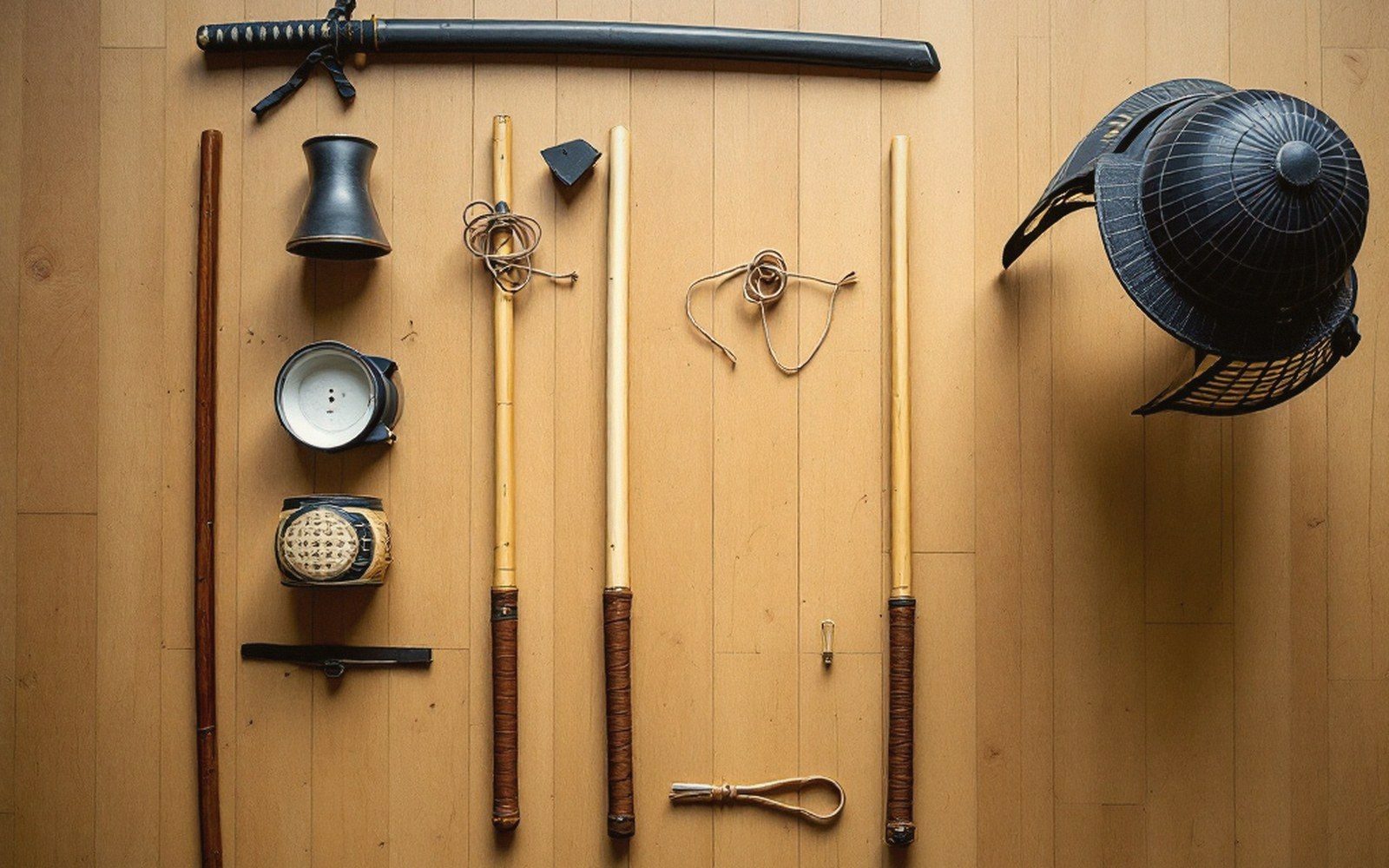
Four staves and a knot
Four shaped slats held in close agreement by three leather fittings and a length of cord — and the character of the whole instrument comes down largely to the position of a single knot.
Everything here is filed by object and by part. Each entry says what the part is made of, what it does, and how it fails.
Seven fittings, nothing glued
Every part comes off. The one that fails most often is the cheapest to replace, and the only piece of metal is buried in the handle.
Photo: AMOL NAKVE / Pexels
- 01 SakigawaTip cap Closes the four staves at the point of highest stress and takes the first contact Leather
- 02 Saki-gomuTip plug Sits inside the cap and keeps the stave ends from collapsing inward Rubber
- 03 NakayuiBinding Fixes the staves a quarter of the length from the tip, and divides flex from handle Leather
- 04 TakeThe four staves Split from one culm, planed inside, hard outer rind left where the blows land Madake bamboo
- 05 TsuruCord Runs the spine under tension, marks the back edge, holds the shaft in compression Braided cord
- 06 TsubaHand-guard Sits at the boundary between handle and blade, held by its own rubber collar Rubber or leather
- 07 TsukagawaGrip Sleeve over the handle core: what wears, and what the hand reads Leather




Six sections
The hub · all 26 entriesShinai
Four staves, a cap, a string and a knot.
6 entriesArmour
Lacquered bamboo, stitched cotton, and what each part takes.
5 entriesWood
The bamboo itself, and why the species matters.
4 entriesFloor
Sprung boards, and the joint that makes them spring.
4 entriesWorkshop
Inspection, replacement and repair.
4 entriesWords
The vocabulary, glossed plainly.
3 entriesWorth reading first
A selection, not the listInspection
What is looked at, in what order, and the faults that take a shinai out of service.
- The four staves — thumb and forefinger down each face, a quarter-turn between passes
- The tip cap — pressed firmly; lateral play means the staves have shrunk away from it
- The cord — lifting more than a few millimetres from the surface is too slack
- The binding — seated evenly, and it should not be able to slide
- The grip — cracking, a slick gloss, or rotation under the hand
A full pass takes about two minutes. A shinai that fails it comes off the rack: repair or retire, and no temporary pass because no spare is available.
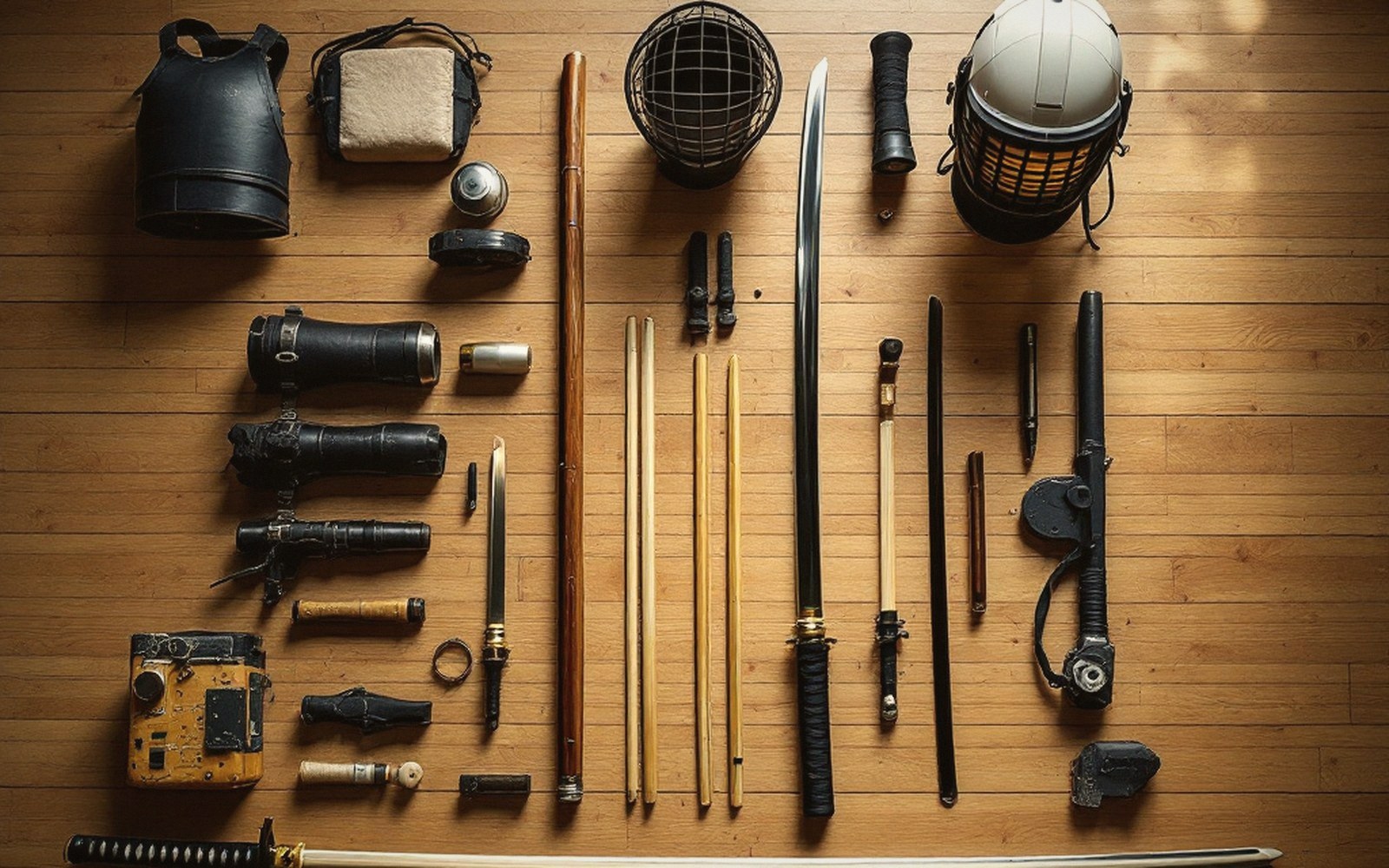
The breastplate
A curved shell of lacquered material that has to take a full strike and stay light enough to move in. ArmourMadake
The species used, why its fibre suits splitting into staves, and what a substitute changes. WoodStitching density
Rows per inch as a measure of protection, stiffness and price. ArmourA floor that gives
Boards laid on battens over a void so the surface deflects a few millimetres. What that saves and how it is built. Floor