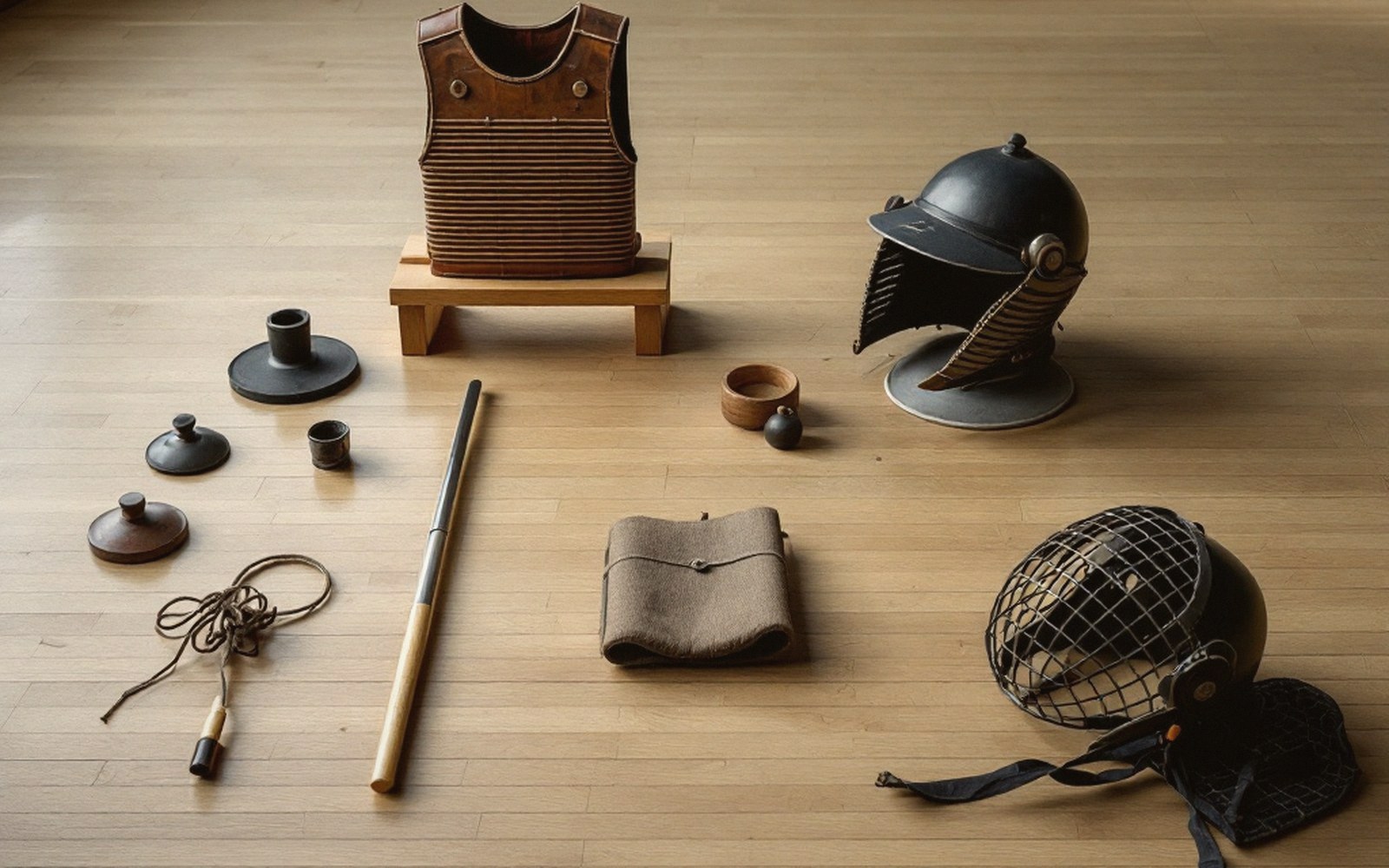
What it does and why it fails
Urushi — Japanese lacquer, a resin tapped from the Toxicodendron vernicifluum tree — cures by oxidation and humidity rather than by drying out. This matters: once cured, it is impermeable. Water cannot reach the bamboo slats of a dō (breastplate) , so the slats do not swell and the bamboo underneath does not split.
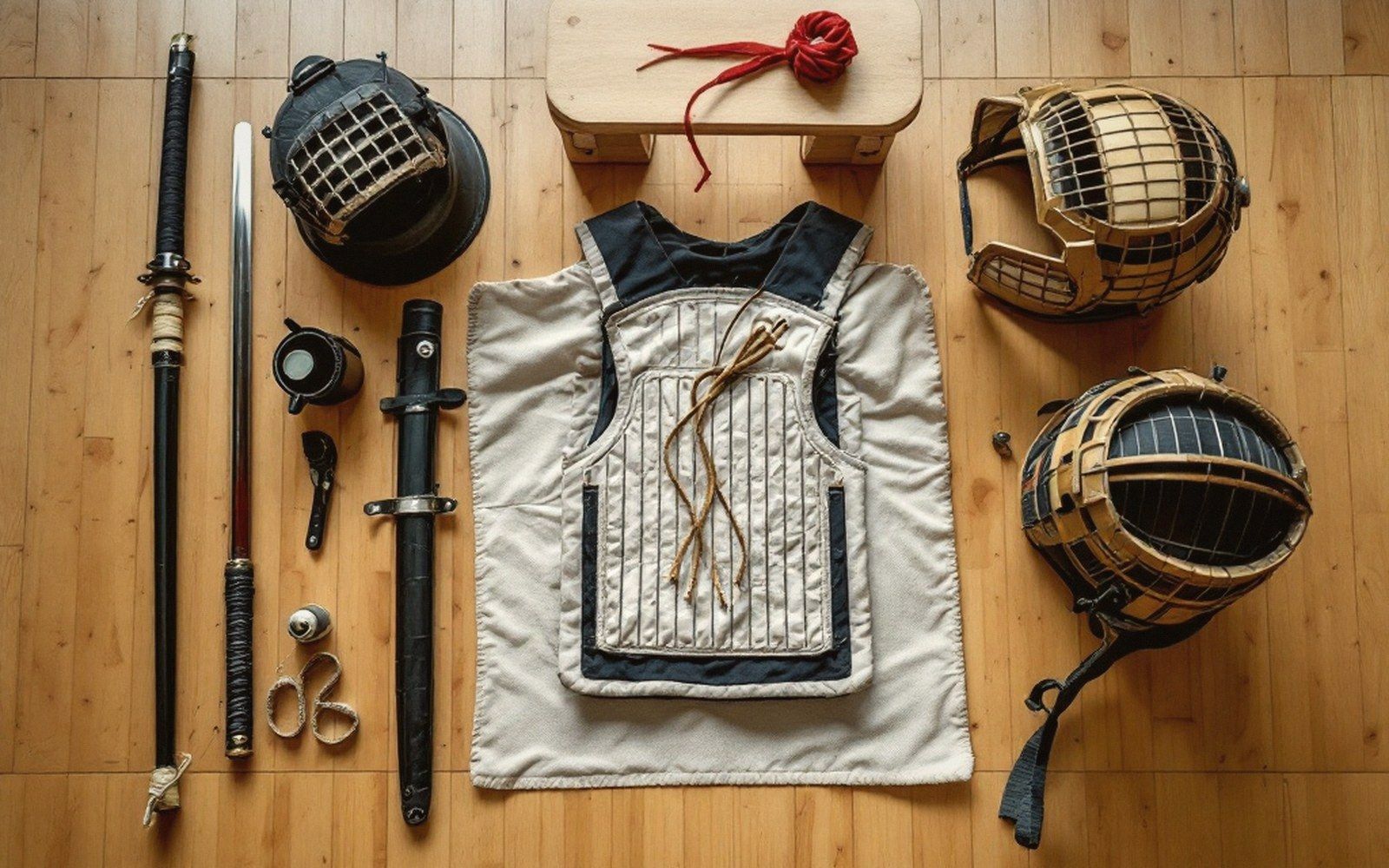
That impermeability is the lacquer's whole structural job. A shinai stave left bare will develop hairline checks within a season; bamboo armour without a sealed surface would do the same, except the consequences of a weakened dō slat are closer to the body.
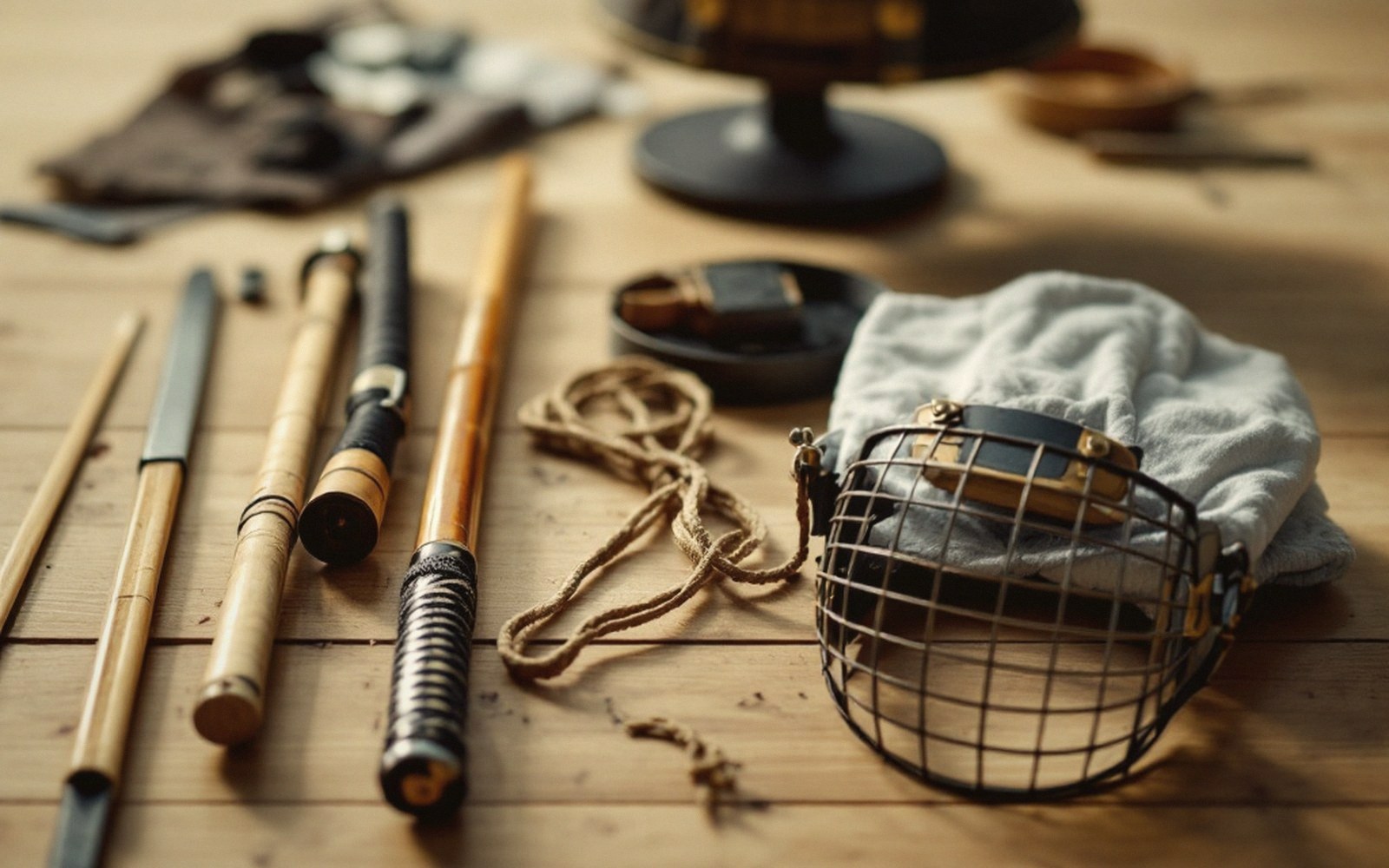
The finish also takes compressive impact and distributes it. Urushi on a curved dō is not a brittle shell — the cured film flexes fractionally with the substrate rather than shattering — but it will craze and flake if struck repeatedly on a sharp edge, or if the underlying bamboo moves more than the coating can follow. That crazing is the first sign of moisture getting in.
Modern pieces often substitute synthetic lacquers — polyurethane or cashew-nut-oil-based coatings — which are cheaper, faster to apply and far less likely to cause the contact dermatitis that raw urushi triggers in many people. The trade is in long-term permeability: synthetics slowly become porous in a way that cured urushi does not, which means a synthetic-finished dō needs its topcoat renewed sooner.
Colour convention — black for most men components, black or deep brown on a dō — has traditional roots, but from a maintenance standpoint the colour tells you nothing. What matters is continuity. Run a thumb across the surface after every session: roughness where there was none is the coating beginning to fail. A flaked patch left untreated admits moisture; the underlying bamboo darkens and softens, and the whole laminated structure that the breastplate section describes begins to delaminate from the inside.
The shine is incidental. The seal is everything.