What it is and what it must do
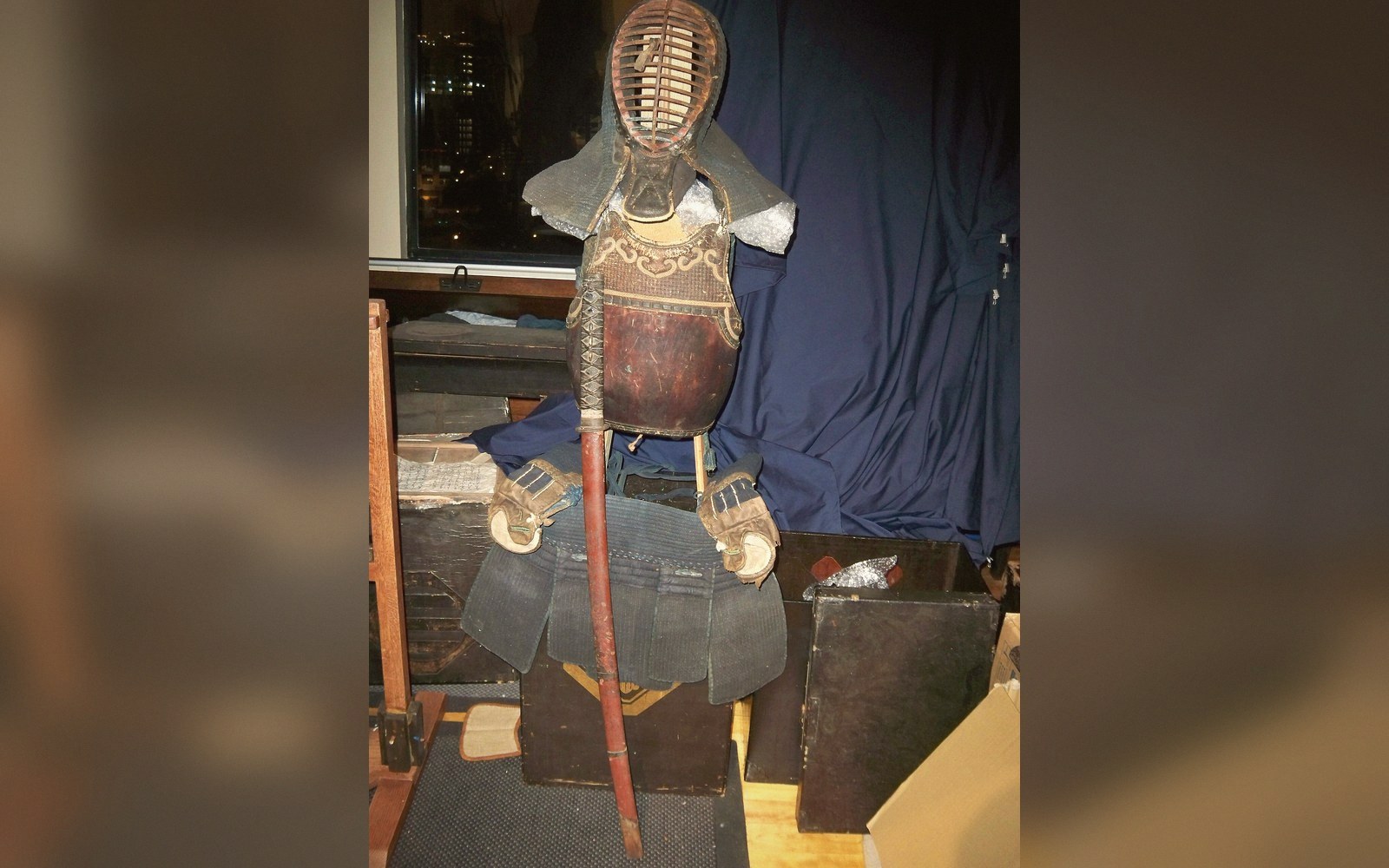
The dō (胴, breastplate) is the most visually striking piece of kendō armour, and also the one under the greatest mechanical demand. A strike to the trunk lands with the full force of a swung shinai, and the dō must absorb that without transferring it. At the same time, the wearer turns, leans, draws the arms wide — so the shell cannot be rigid in the wrong planes, cannot sit too far from the body, and cannot weigh enough to slow the upper body down. The engineering answer is a curved surface: an arch resists compression far better than a flat plate, and the curvature also stands the shell slightly proud of the torso, so the force peaks and dissipates in the air gap before it reaches the body beneath.
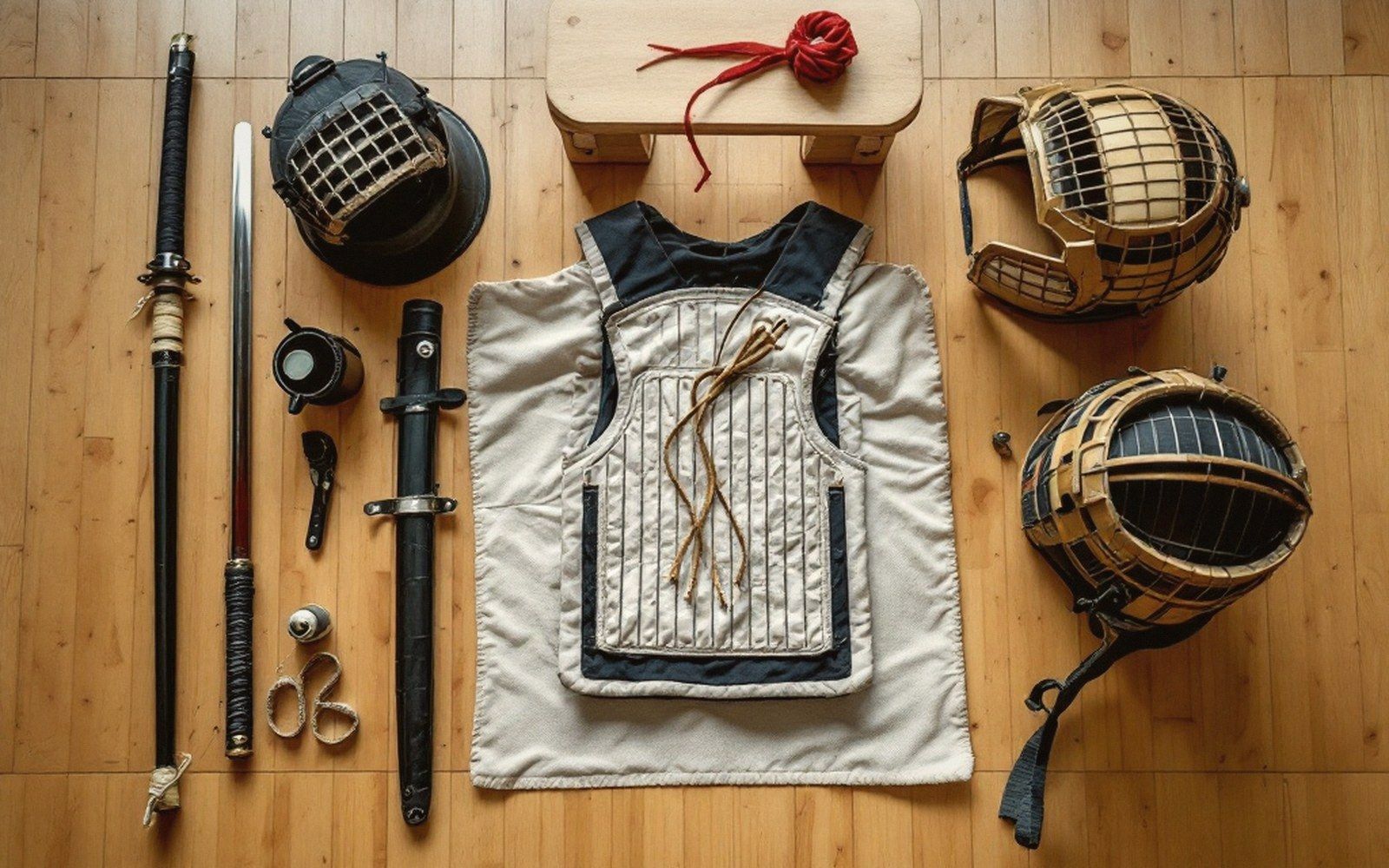
The traditional shell is built from horizontal strips of bamboo — kiln-dried, laminated under pressure, then ground smooth and lacquered repeatedly until the surface is glassy and hard. The bamboo core is the structural choice: it is light for its stiffness, it splits along controlled lines rather than shattering, and it accepts lacquer cleanly. Modern dō shells substitute a range of materials — resin-impregnated fibreglass, carbon-composite laminates, and moulded plastics of various grades — but the geometry is essentially unchanged. The curve, the stiffened lower rim, the slight flare at the hips: these are not decorative decisions but structural ones that have remained stable across generations of manufacture.
Construction and finish
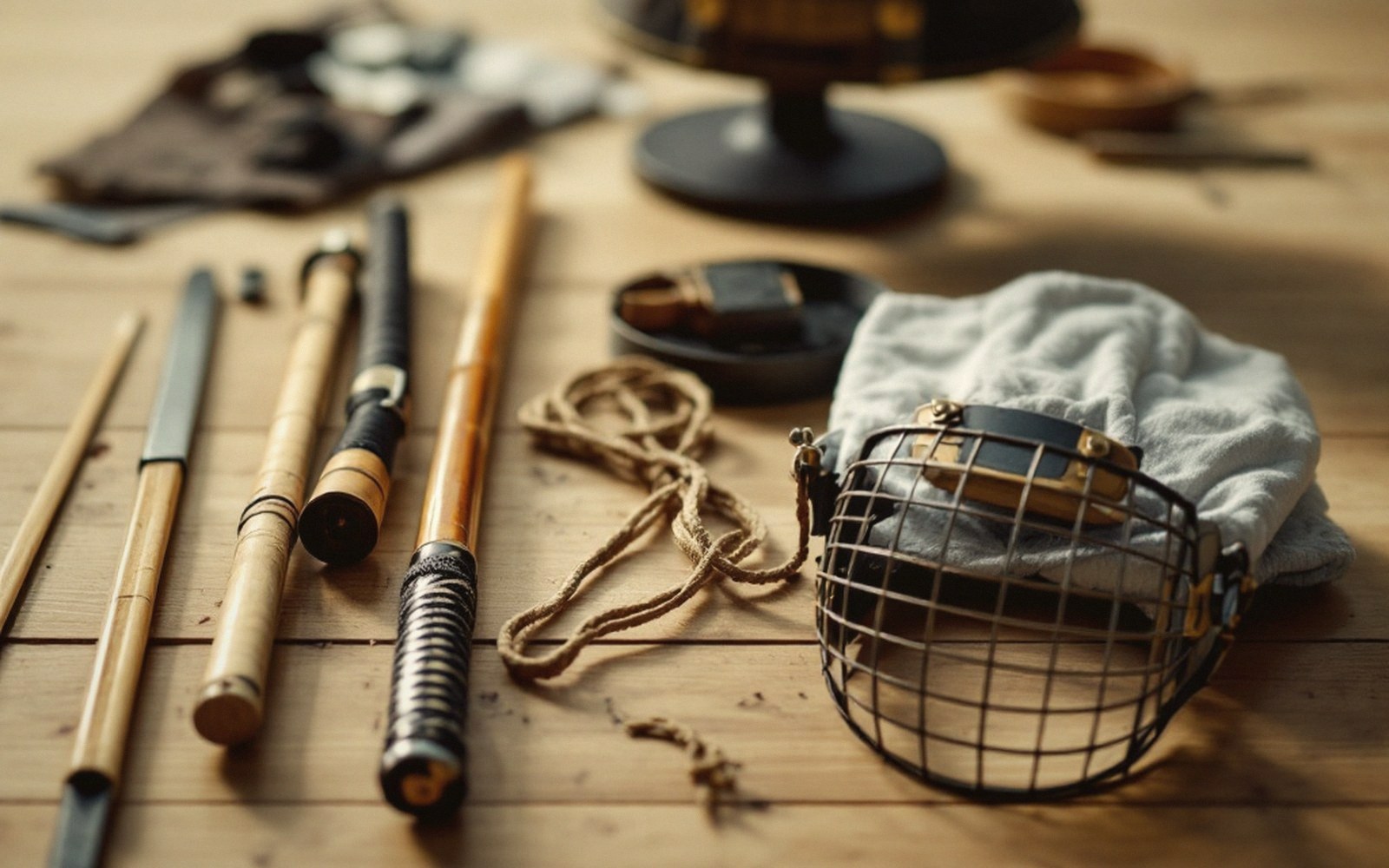
A bamboo dō shell is assembled in horizontal rows, each strip roughly the width of a finger. The strips are glued and pressed into a pre-formed curve, with the grain of adjacent strips opposed to one another to prevent the whole panel from warping in one direction. Once cured, the outer face is planed to a consistent thickness — thin enough to save weight, thick enough that a mis-hit along the rim does not crack through — and the edges are rounded and sealed.
Lacquering follows in stages. A ground coat fills the pores and binds to the bamboo; successive coats build the shell surface. The final coats determine both colour and gloss. Black (kuro-urushi) is the most common finish; red-brown (aka) and deep brown are traditional alternatives. The thickness of the lacquer film matters practically: a surface too thin chips when struck at an angle; one too thick becomes brittle in cold and can craze. The exact layering — and the degree of polishing between coats — is where a craftsman's skill shows. A well-lacquered dō rings when tapped and reflects light evenly; a poorly built one shows fine surface cracks inside a season.
The inside of the shell is lined with a soft material — traditionally leather or thick cloth — that cushions the contact points and prevents the bamboo edge from digging into the floating ribs. This lining is often the first part to need replacement, worn through by the constant pressure of movement rather than by strikes.
Attachment runs through a system of cords that tie from the upper rim of the dō up to the chest and over the shoulders, and from the lower corners around the back. The cord placements are not arbitrary: they position the shell so its centre sits over the area the rules of engagement define as a valid target — the right and left sides of the trunk — and they hold it without allowing it to rotate on impact.
The traditional shell is built from horizontal strips of bamboo — kiln-dried, laminated under pressure, then ground smooth and lacquered repeatedly until the surface is glassy and hard.
What fails, and when
Cracks in a bamboo dō almost always start at the rim or at the lower flare, where the curve transitions to a straighter edge and bending stress concentrates. A crack that runs parallel to the bamboo strips can sometimes be repaired with consolidant and a new lacquer coat; one that crosses the laminations, or that runs toward the centre of the shell, changes the stiffness of the panel in a way that cannot be restored, and the shell should be retired. The lining and the cords wear first and are replaced routinely. The shell itself, if it was built well, outlasts them by many years.