The enemy is not time — it is the uncontrolled swing between wet and dry. A shinai left in a hot car for an afternoon can lose enough moisture to set a permanent warp in two or three staves; the fibres compress unevenly, and no amount of re-oiling fully restores what was straight.
Stand it up, don't lay it down
Horizontal storage on a shelf allows the staves to sag under their own weight over weeks. The correct position is vertical, tip uppermost, in a rack or bracket that holds the grip end without clamping it. If you are storing more than one, keep them separated — staves touching each other under pressure will conform to each other's shape.
The ideal environment is the same room you are comfortable working in: roughly 45–65 % relative humidity, stable temperature. Workshops and spare rooms are fine. Garages are not, because they follow the outside air. Car boots are the worst possible location — temperatures above 50 °C are common in summer, and a sealed space drives humidity to near zero before it can equalise.
A bamboo sleeve or cloth bag slows the rate of moisture change rather than preventing it, which is the correct ambition. The goal is not to seal the staves from the atmosphere; it is to dampen sudden swings. Never use a plastic bag: it traps humidity unevenly and promotes the surface mould that begins in the cord channel and works inward.
The cord and leather respond too
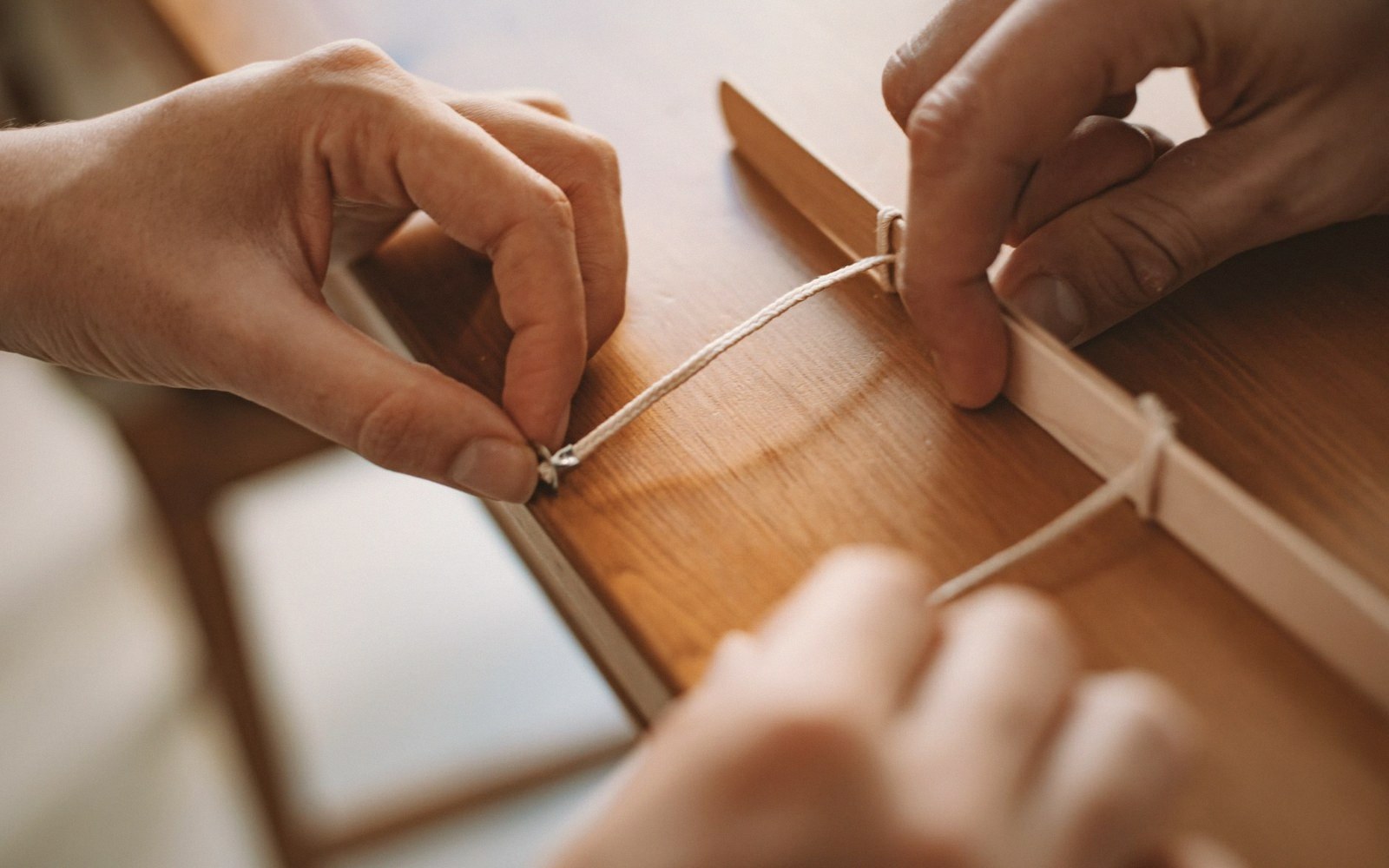
Leather — the tip cap and grip — shrinks as it dries and softens again as humidity rises. A cap that seemed secure can loosen after a hot, dry storage period; check tension at both ends before use. The cord down the spine is under permanent tension, and a dried-out cord loses elasticity; it will feel and sound different before it shows visible change. Run a finger along it after any period of unusual storage. Check the staves too — a hairline split that opens in dry air can close again with humidity, masking damage that still needs attention.
Short-term storage is maintenance-neutral only if the conditions are stable. It is the irregular — the boot of the car, the unheated garage through a cold wet winter — that makes the repair bench necessary.