What the cord actually does
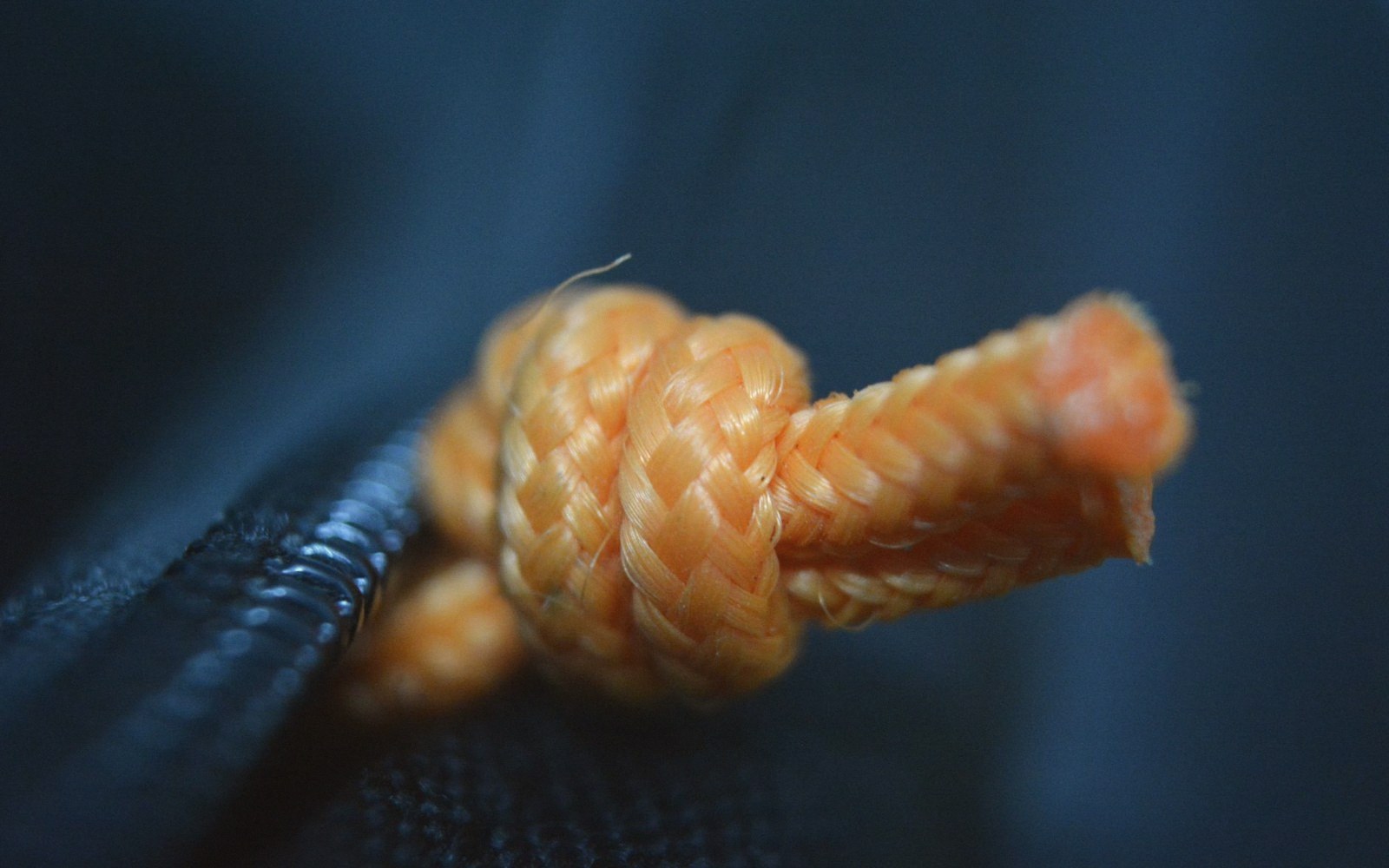
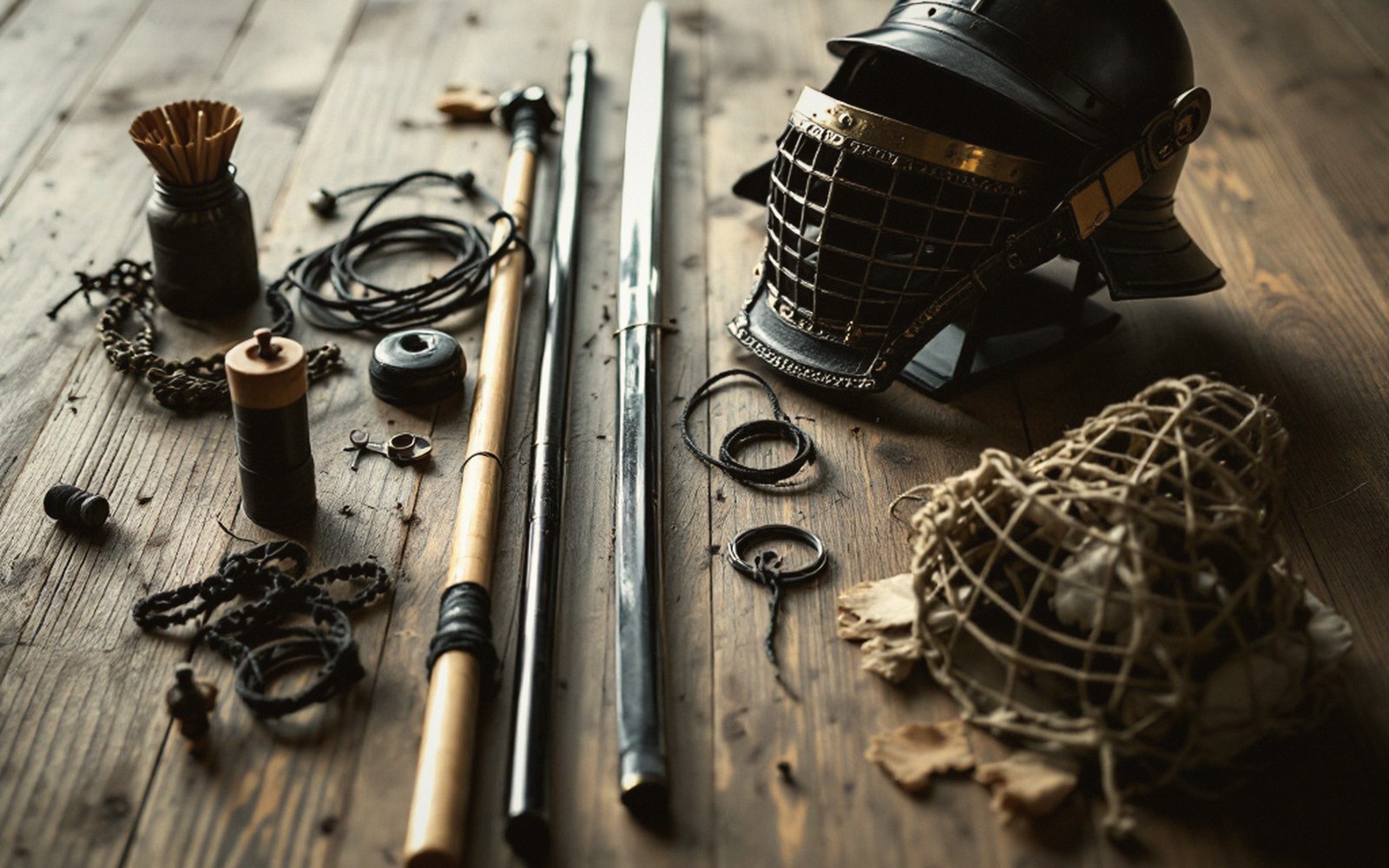
The tsuru — the bowstring cord that runs along the flat back of a shinai from knot to tip cap — is easy to underestimate. It looks ornamental until you consider its job: it maintains constant compressive tension along the spine of the assembly, holds the sakigawa (leather tip cap) seated properly, and tells you which face of the shinai should strike. That last function is not trivial. The stave geometry means the four slats have a preferred orientation, and the cord marks it.
The cord is anchored at the tsukagashira, the butt end, and runs forward over the sakigawa's tab to be held fast by the cap itself. Tension is set when the cord is tied, and it degrades with use. Bamboo compresses under repeated striking; the staves settle; the tsuru slackens. A cord that hangs loose off the spine rather than lying flat against it has already lost most of its function.
Why does slack matter beyond aesthetics? First, a loose cord can catch on the opponent's equipment — a small but real hazard. Second, and more structurally, the stave assembly without longitudinal tension can splay fractionally under impact, which changes the flex profile of the whole piece and accelerates stress at the nodes. A correctly tensioned cord is part of the load path, not decoration on top of it.
The cord material is almost always a synthetic twisted braid today — nylon or polyester — though natural fibre versions exist. Synthetics hold tension better across humidity cycles, which matter considerably to a material as hygroscopic as madake bamboo. Natural fibre swells when wet, which can give a falsely taut feel that slackens as the string dries.
When checking a shinai before use, run a finger under the cord at mid-length. It should offer real resistance — close to flush with the spine. Any play much beyond a few millimetres is enough to warrant re-tying. The knot at the handle is not especially difficult to learn, but the position of the nakayui along the stave is measured, not guessed; getting it wrong shifts the flex point and alters how the shinai feels in the hand.
A cord costs almost nothing. The habit of checking it costs less.