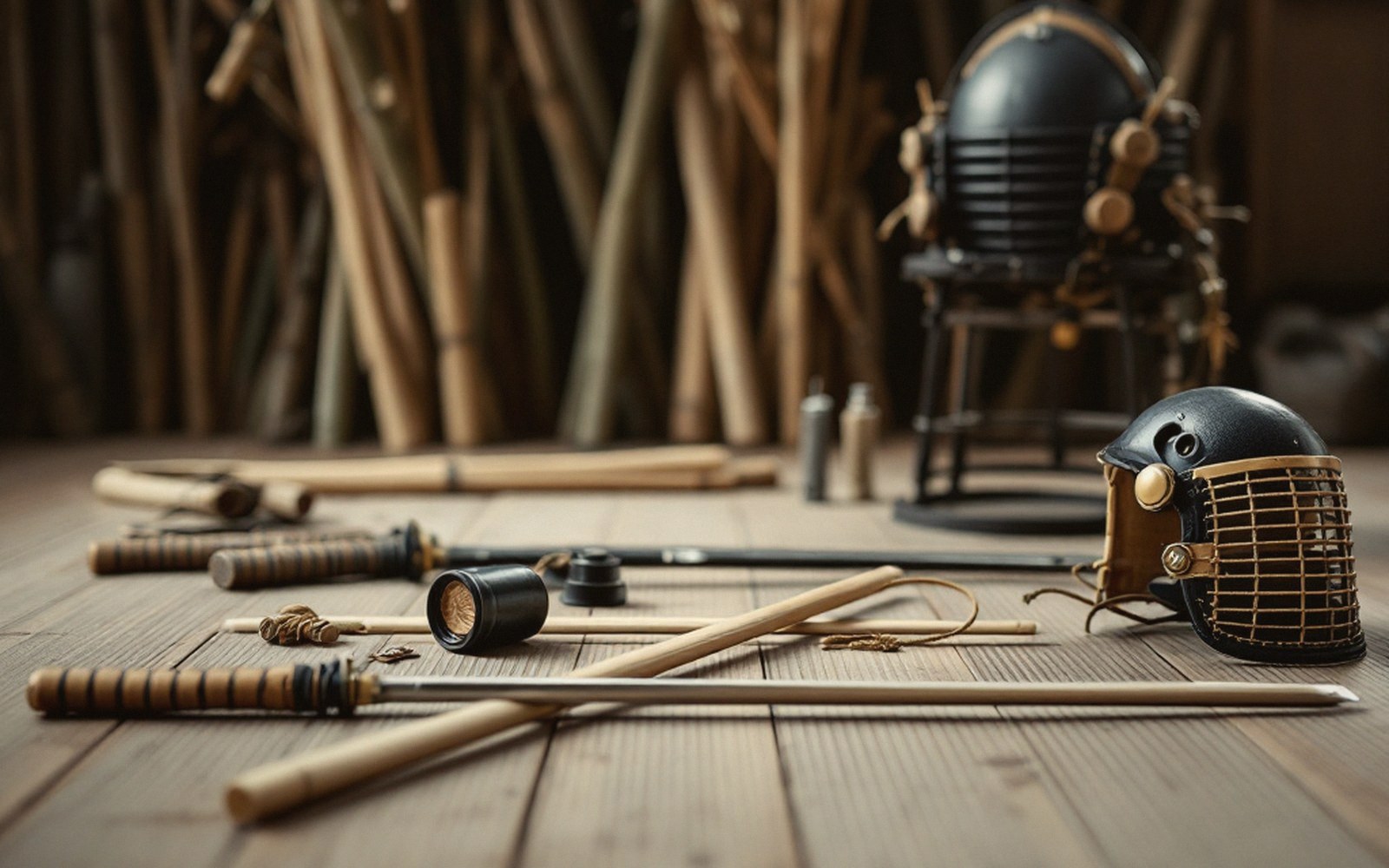
Bamboo is not wood in the botanical sense, but it behaves like it in one important way: left in a dry room, the fibre loses moisture, contracts slightly, and becomes brittle. Staves that feel smooth and dense in a humid workshop will turn chalky and prone to splitting through a heated winter or a long dry summer. Oiling is the small maintenance act that slows that process down.
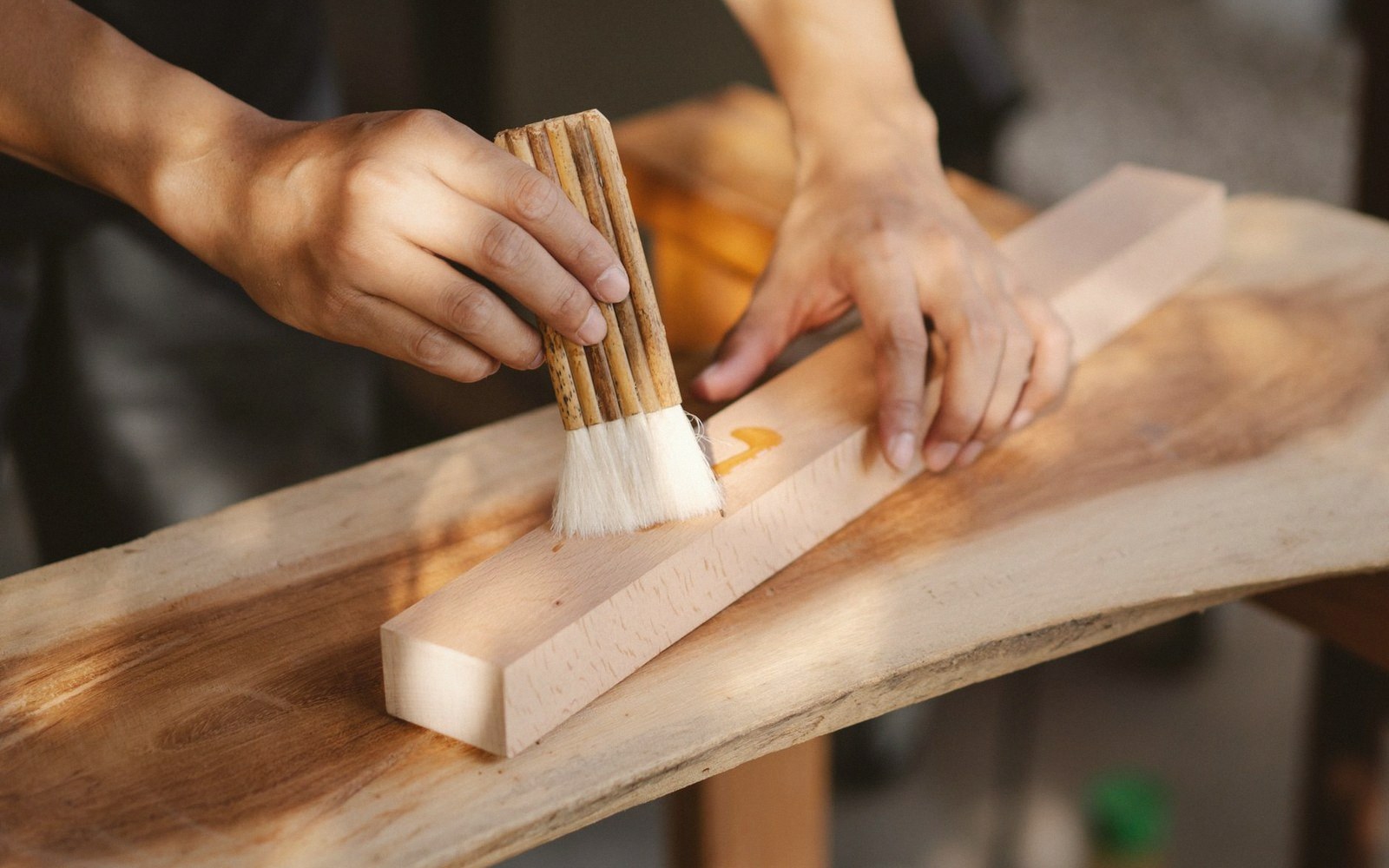
The routine is modest. A cloth — cotton, lint-free — is dampened with a light, non-drying oil and rubbed along each stave in the direction of the grain, tip to handle. Camellia oil, tsubaki abura in Japanese, is the traditional choice and still a sensible one: it is thin enough to penetrate without pooling in the grooves, it does not turn rancid quickly, and it has been used on bladed tools and lacquered surfaces in Japan long enough that its behaviour on bamboo is well understood. A very small amount is enough. The point is to replace surface moisture, not to saturate the fibre or leave the stave greasy.
Mineral oil is a workable alternative when camellia is unavailable. It does not oxidise, carries no smell, and behaves predictably. What to avoid is anything that forms a hard film — linseed oil, tung oil, varnish — because a sealed surface traps the bamboo's own moisture movement and can cause delamination along the inner face of the stave where it has been split and shaped. The same logic rules out silicone-based products: they penetrate nothing and coat everything.
Frequency is driven by environment. In a temperate workshop with stable humidity, once or twice a year is enough for a shinai in regular use. In a centrally heated room, or anywhere that the staves look pale and feel slightly rough underhand, the interval shortens. The test is simple: a stave that has given up surface moisture will feel different from one that has not. Running a clean fingertip along the flat face tells you more than any schedule.
The best moment to oil is just before storage rather than just before use. Oil applied and left overnight settles into the surface; oil applied an hour before practice sits on it. Disassembly is not necessary — the cord and cap stay on — but if the staves are already apart for replacement or inspection, that is the logical time to treat every surface properly, including the inner faces that are otherwise never reached.
No single application preserves bamboo indefinitely. The value is in regularity: a small amount of attention, returned to often enough that the fibre never gets far from where it should be.