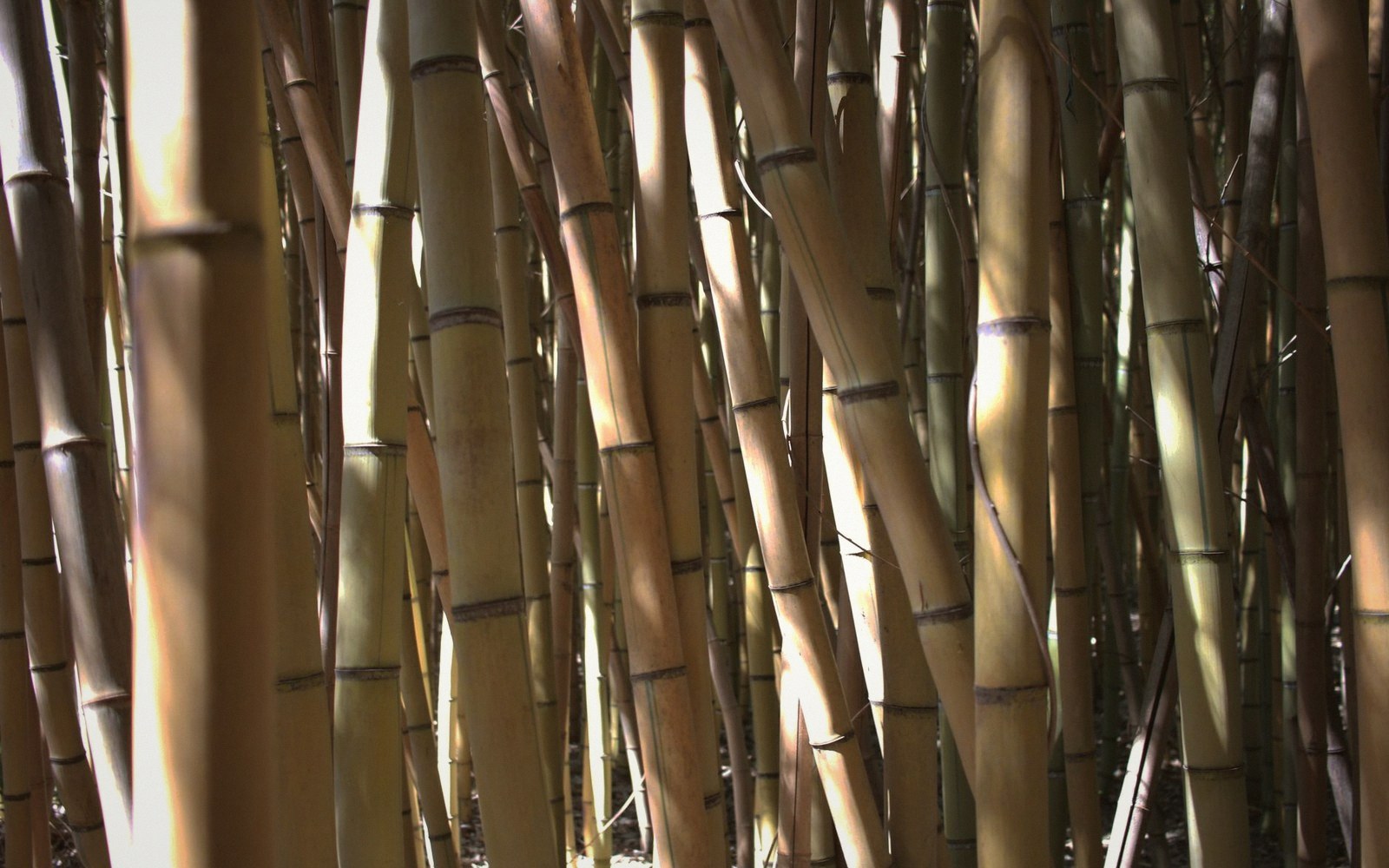
Why this species and not another
Bamboo is not wood. It is a grass, and its structural logic is entirely different from timber: no annual rings, no radial grain, no heartwood. Strength comes instead from vascular bundles — dense, fibrous tubes that run axially through the culm (the hollow stem) — and their distribution varies sharply between species. In Phyllostachys bambusoides, known in Japanese as madake, those bundles are dense and evenly distributed through the wall thickness, concentrated slightly toward the outer skin. That arrangement is precisely what a stave needs.
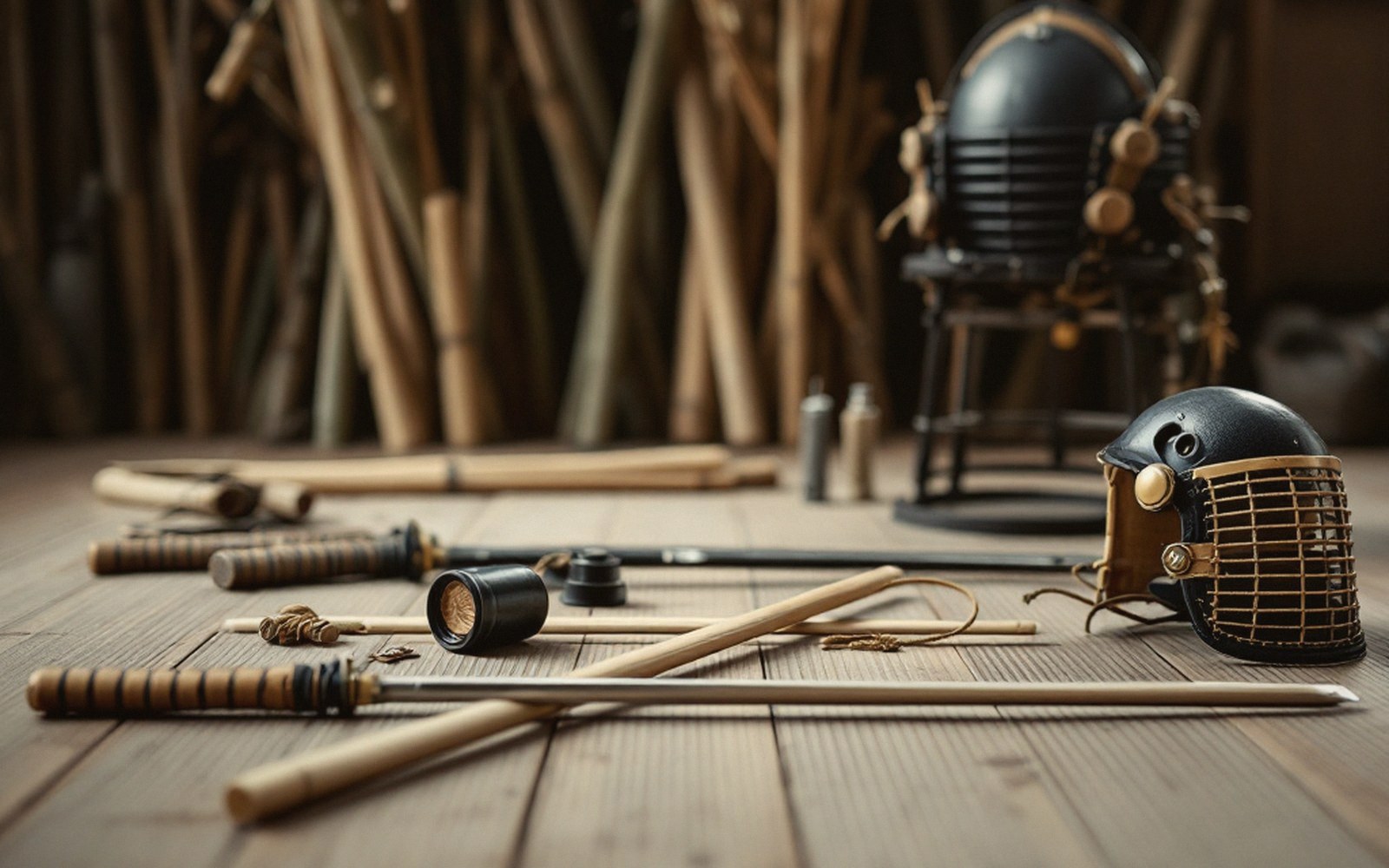
Madake is one of the largest running bamboos grown in Japan, with culms commonly reaching eight to twelve metres in height and outer walls thick enough, once the culm is ripe, to split into the four staves of a shinai without the individual pieces becoming too thin to hold their shape under impact. The wall thickness at the nodes — the solid diaphragms that interrupt the hollow interior at regular intervals — is especially important: nodes are the points of maximum compression resistance, and makers orient them deliberately when cutting staves. A culm that is too thin-walled yields staves that flex correctly but splinter too quickly; one that is too thick produces staves that are stiff and transmit shock harshly rather than absorbing it.
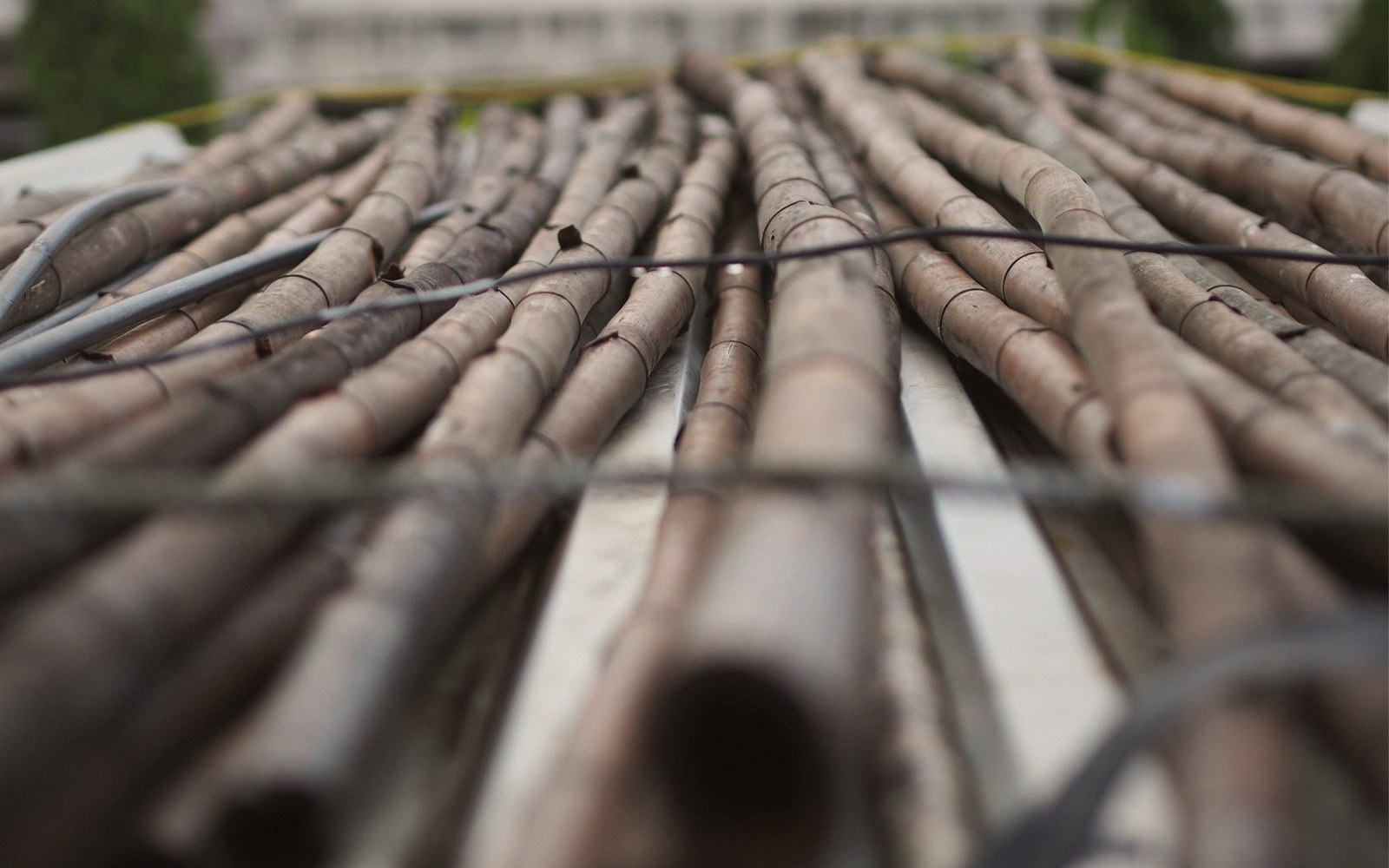
Maturation matters as much as species. Madake culms are generally left to stand for three to four years before harvest. In that time the fibres in the vascular bundles lignify and the outer skin — the hard, greenish epidermis — becomes the primary tension surface of each stave. Cut too early and the culm is supple but structurally immature; the fibres compress under repeated strikes and the stave loses its spring permanently. Cut too late and the culm becomes brittle, drying to a state where the longitudinal splits that a maker needs to run cleanly will instead branch and fracture unpredictably.
The splitting itself
A shinai stave is not sawn. It is split — and madake behaves well under a splitting load for a specific reason. The vascular bundles run straight and parallel along the axis of the culm. A wedge or a blade started at the end of a section follows those bundles almost automatically, producing a cleavage surface that is smooth and fibrous rather than torn. Species with more irregular bundle distribution, or with bundles that spiral even slightly, resist straight splitting; the split wants to wander, and the stave that comes out is twisted or uneven in thickness.
Once split, each stave is worked — scraped and shaved to the correct profile — with the outer skin kept intact. That skin is harder and denser than the inner tissue, and it becomes the strike face of the assembled shinai. Damage or thinning of this surface during shaping is one of the more consequential errors at the bench, because the skin cannot be restored once removed.
What a substitute changes
The shortage of high-quality madake culms outside Japan has driven the use of substitute species, most commonly Phyllostachys nigra var. henonis (known in Japanese as hachiku) and carbon-fibre composite construction. Each changes something.
Hachiku splits adequately but its wall tends to be thinner and its vascular bundles somewhat less dense. Staves made from it can be lighter, which some practitioners prefer, but the surface is less hard and the stave wears faster under repeated strikes. The feel under impact — the specific rebound and the sound — differs from madake in ways that are difficult to specify precisely but immediately apparent in use.
The wall thickness at the nodes — the solid diaphragms that interrupt the hollow interior at regular intervals — is especially important:
Carbon-fibre composite shinai sidestep the material entirely. They are consistent in a way no natural culm can be, and they do not splinter. What they lose is the grain-level compliance of bamboo fibre: a bamboo stave deflects and recovers in a way that is distributed through millions of individual fibres acting together; a composite stave deflects as a unit and returns energy differently. Whether that difference matters is a question of use, not of construction — but understanding it starts with understanding what madake was doing in the first place.