
Where the fibre decides what happens
Bamboo grows in sections separated by solid partitions called nodes — the slightly raised rings visible along any culm. Between them, the fibre runs in long, parallel bundles, dense toward the outer wall and looser at the pith. That outer zone is where the structural work happens: the vascular bundles there are tightly packed, hard to compress and extremely strong in tension along the grain. When a culm is split into staves, the maker is choosing to keep those fibres continuous and uninterrupted — which is exactly why madake (Phyllostachys bambusoides), with its thick outer wall and straight internodal fibre, became the preferred species.
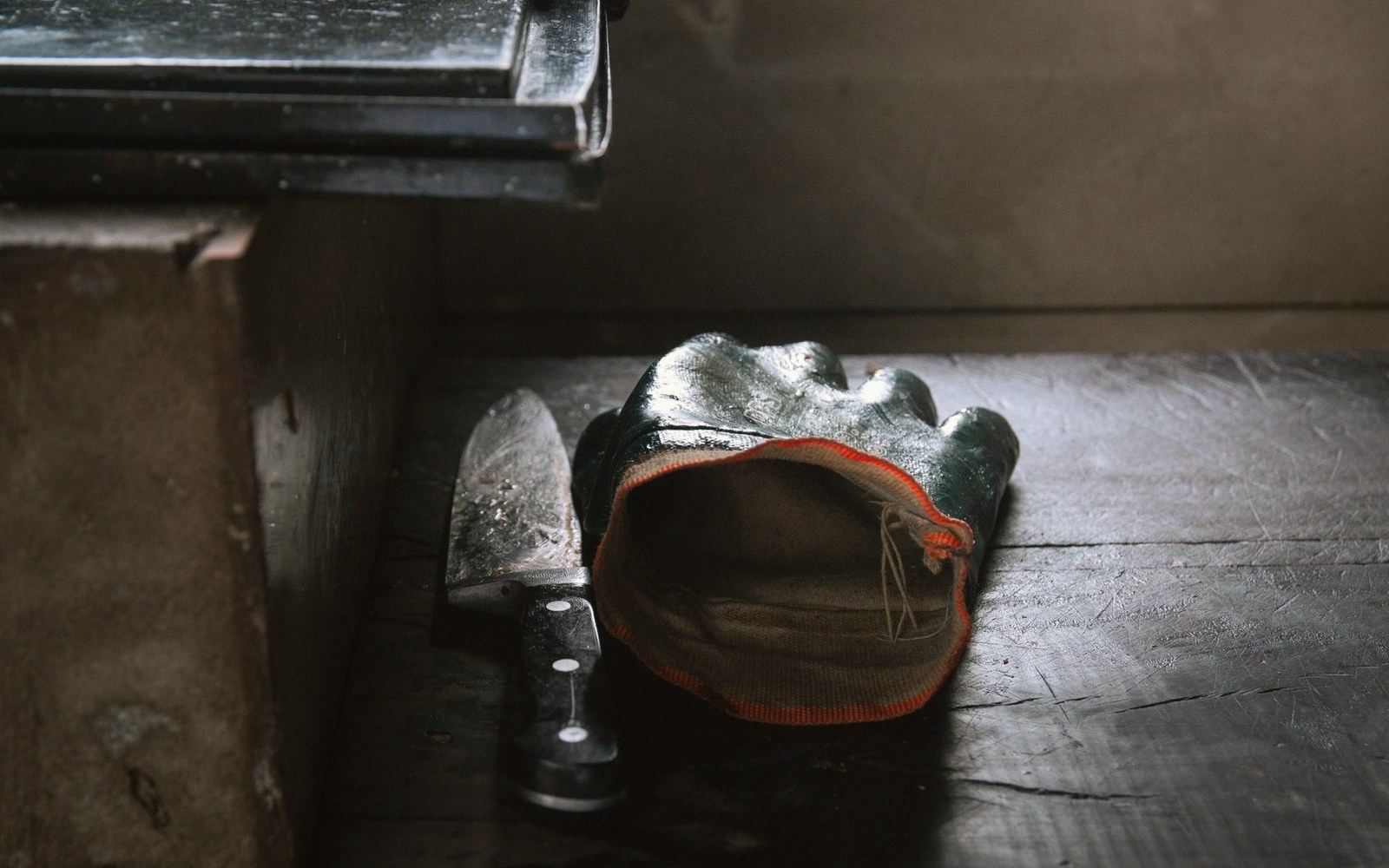
A node changes everything. The partitions are dense and mineralised, but the fibre around them is no longer straight — it kinks, fans outward through the wall and rejoins at an angle either side. Under a strike, that transition zone is where stress concentrates. A stave whose node falls directly at the point of maximum bending is measurably weaker than one whose node sits clear of that zone. This is not guesswork; it is the reason Japanese craftsmen have traditionally orientated the four staves so that nodes are staggered around the circumference rather than aligned. Four nodes in the same plane create a single weak ring across the whole shinai.
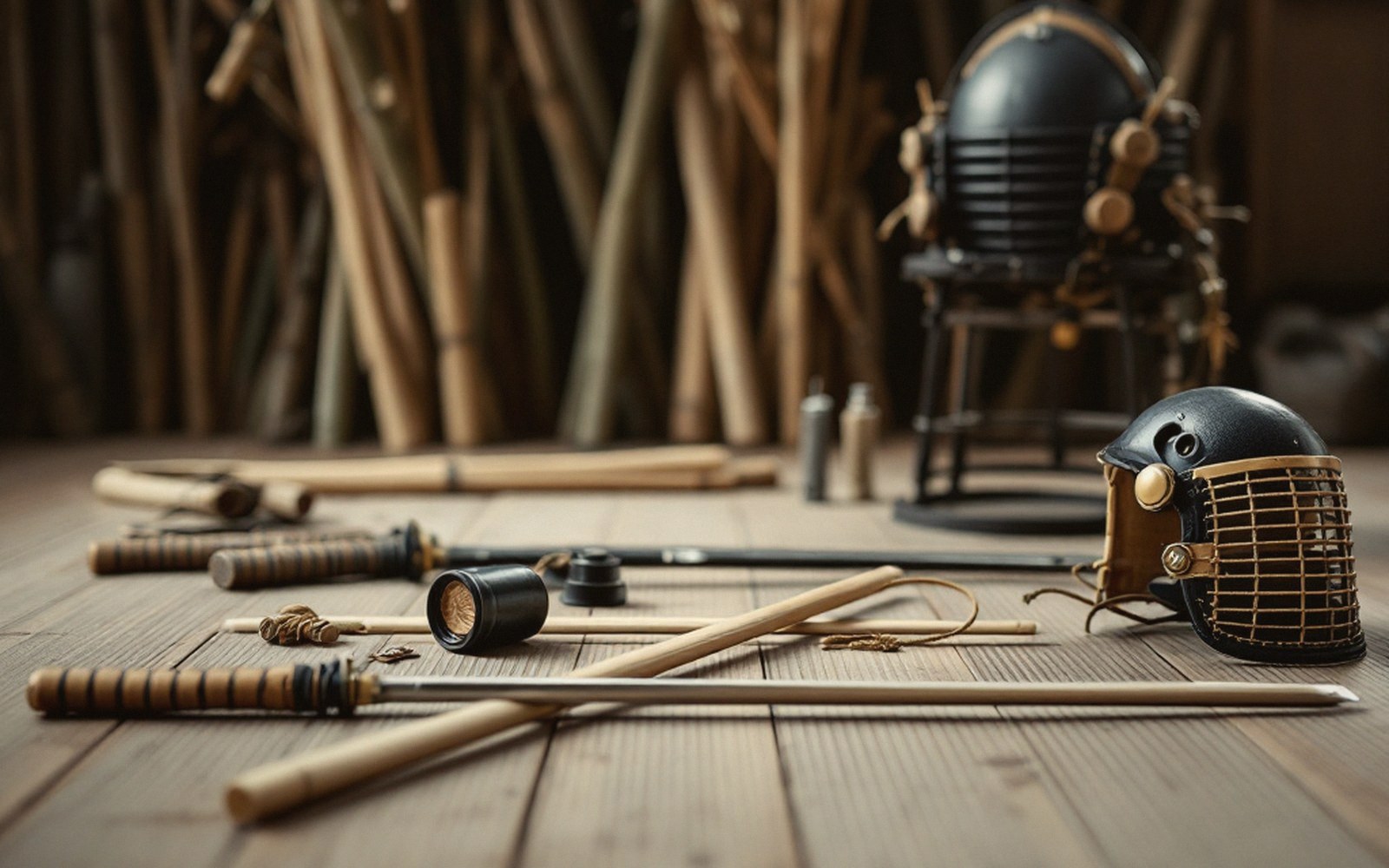
The node also resists the drawknife. Shaping internodal bamboo is steady, predictable work; hitting a node is like running a plane into a knot in hardwood — the grain reverses, the tool wants to dig, and too much pressure chips the surface rather than paring it clean. Experienced splitters read ahead and ease off before the node, letting the geometry of the tool do less and the hand do more.
Heat is what brings nodes into line with the rest of the stave. A gentle flame softens the lignin enough to press or pull a node flat and coax the surface true. Done carefully it does not weaken the partition; done too fast it scorches the outer silica layer and opens exactly the kind of surface cracking that leads to splinters in use.
The node is not a defect. It is the culm's own engineering — a stiffening ring, a fire break, a place where growth paused. The maker's job is to work with it, not around it.