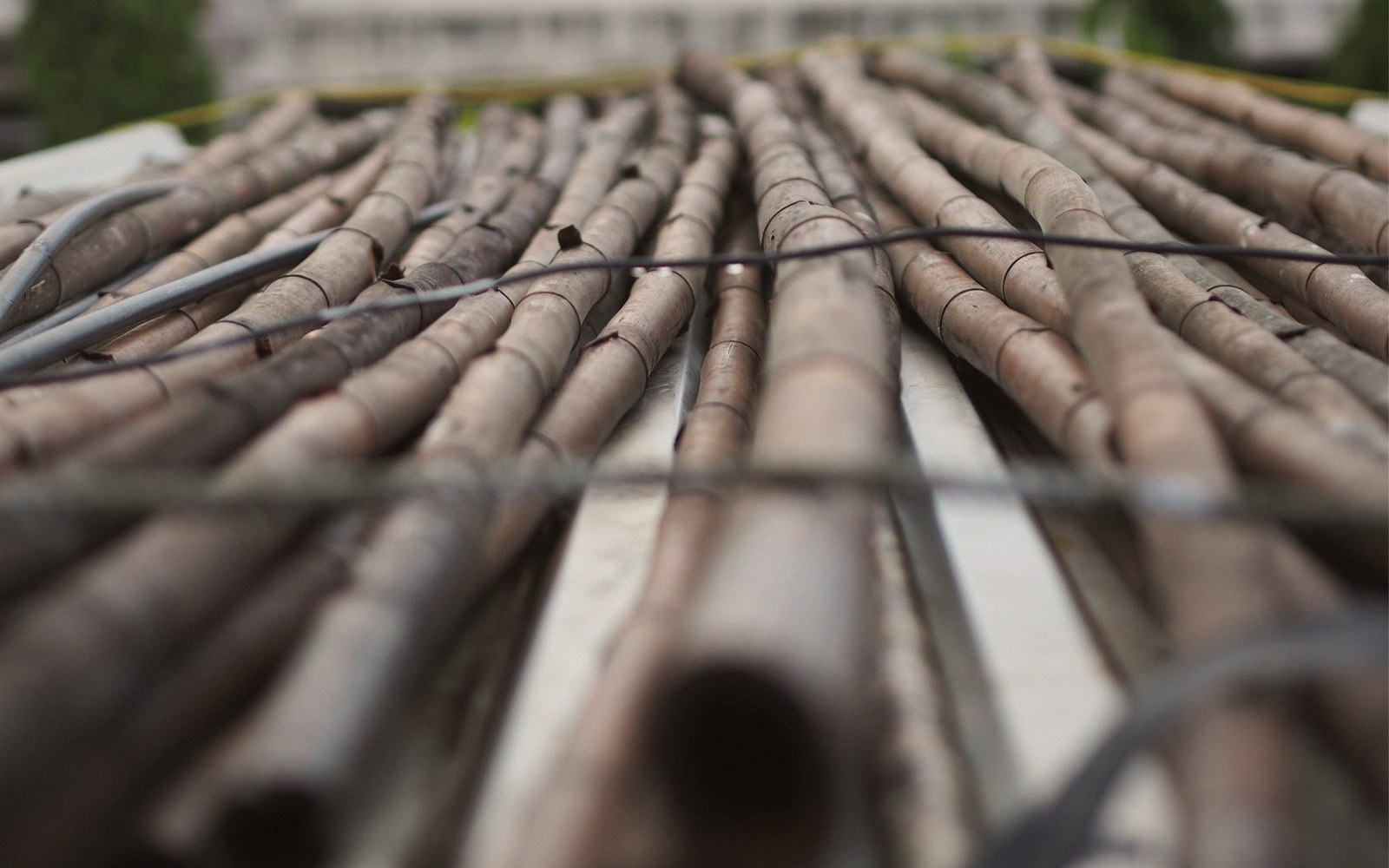
The crack that announces itself
Fresh-cut bamboo holds a great deal of water — not just surface moisture but fluid bound within the fibres themselves. Before a culm can be split into staves, that water must leave slowly and evenly. If it does not, the outer surface dries faster than the interior, the outer layer contracts under tension, and the fibres tear along the grain. The crack that results is not cosmetic. It runs the length of a stave, widens under use, and makes the piece unworkable.
Traditional practice in Japan harvests culms in late autumn or winter, when the plant is carrying less sap and the cellular moisture content is closer to the level it needs to reach. The culms are then stood upright or racked in a ventilated space — out of direct sun, which dries the surface too aggressively — and left for months. The Japanese term for this patient preparation is kanso, drying, though practitioners often simply speak of letting the bamboo rest.
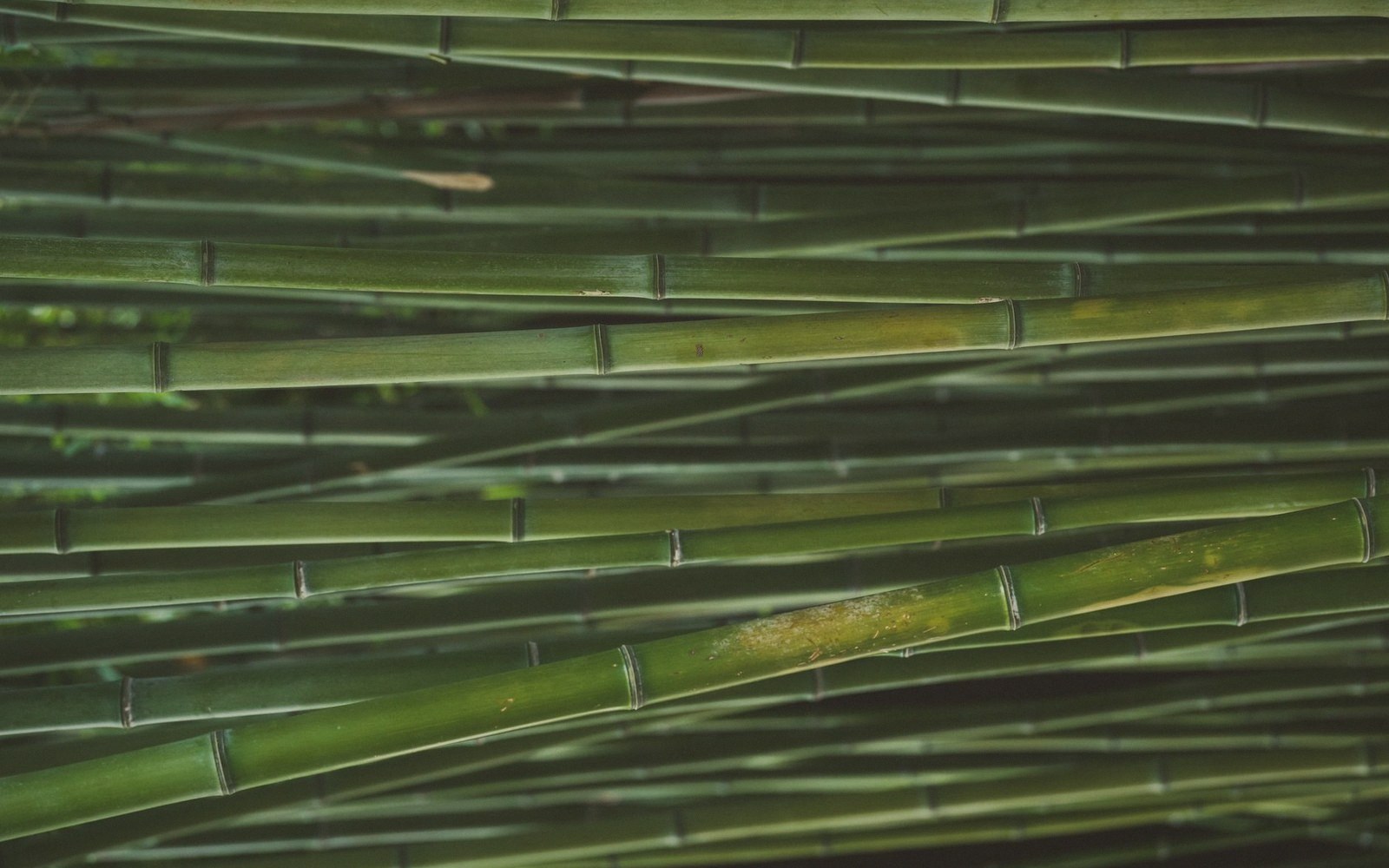
The species matters here. Madake, Phyllostachys bambusoides, the bamboo from which most staves are cut, has a dense outer skin and a fibrous inner wall. Those two zones release moisture at different rates, which is exactly why slow, even drying in still air works and a heated drying room often does not: forced heat steepens the moisture gradient between skin and core rather than flattening it. The grain and the nodes complicate the picture further — nodes slow moisture migration along the culm, so a badly racked piece can dry unevenly along its length as well as across its wall.
Properly seasoned bamboo is pale, slightly lighter than fresh-cut, and rings cleanly when tapped. Staves made from it will take oil, flex under impact and stay dimensionally stable through changes in ambient humidity. Staves made from bamboo that was rushed through drying look fine at first. The cracks appear later — sometimes in storage, sometimes mid-use — and they appear without warning.
The time saved by cutting early is always smaller than the time lost to the failure.