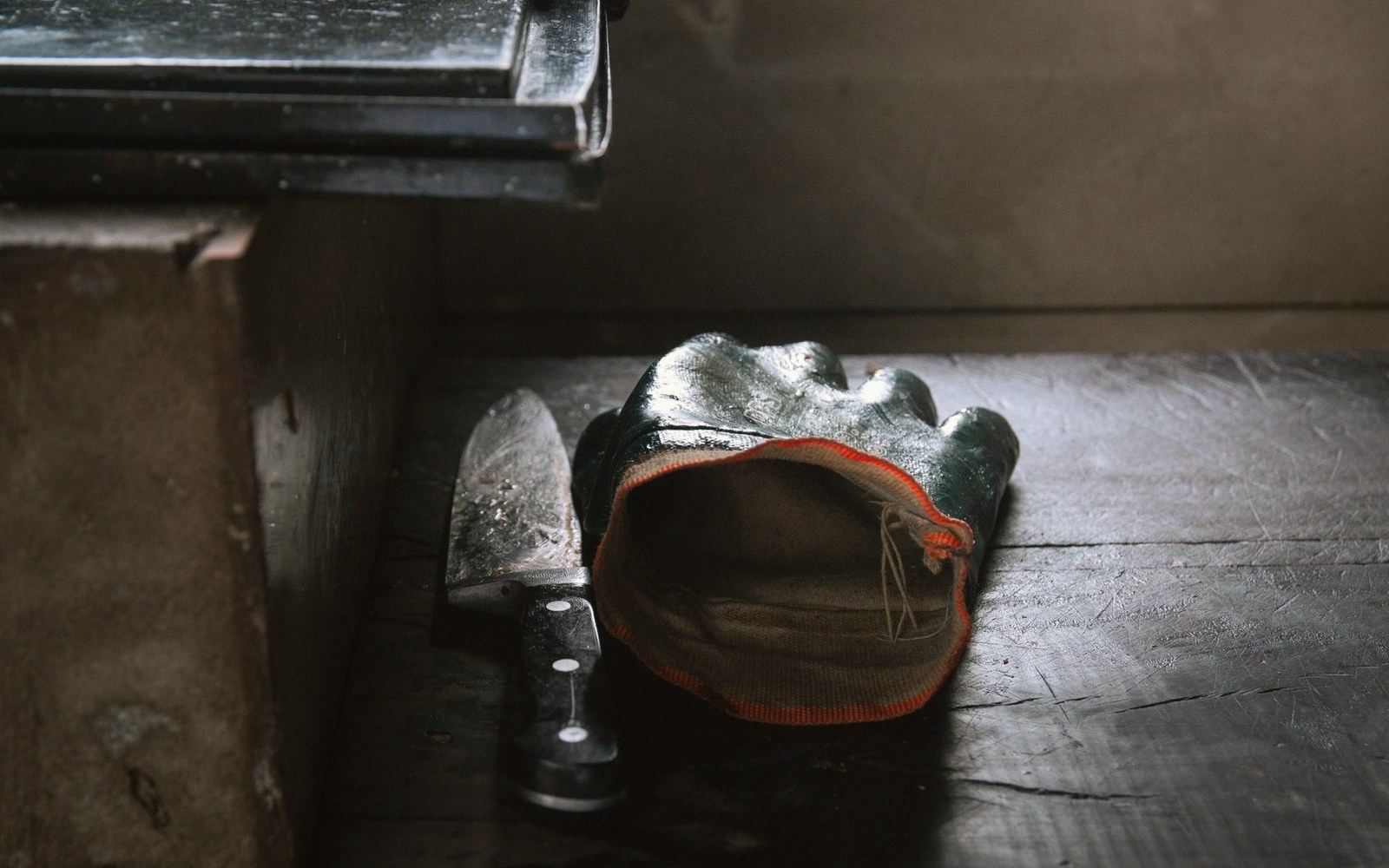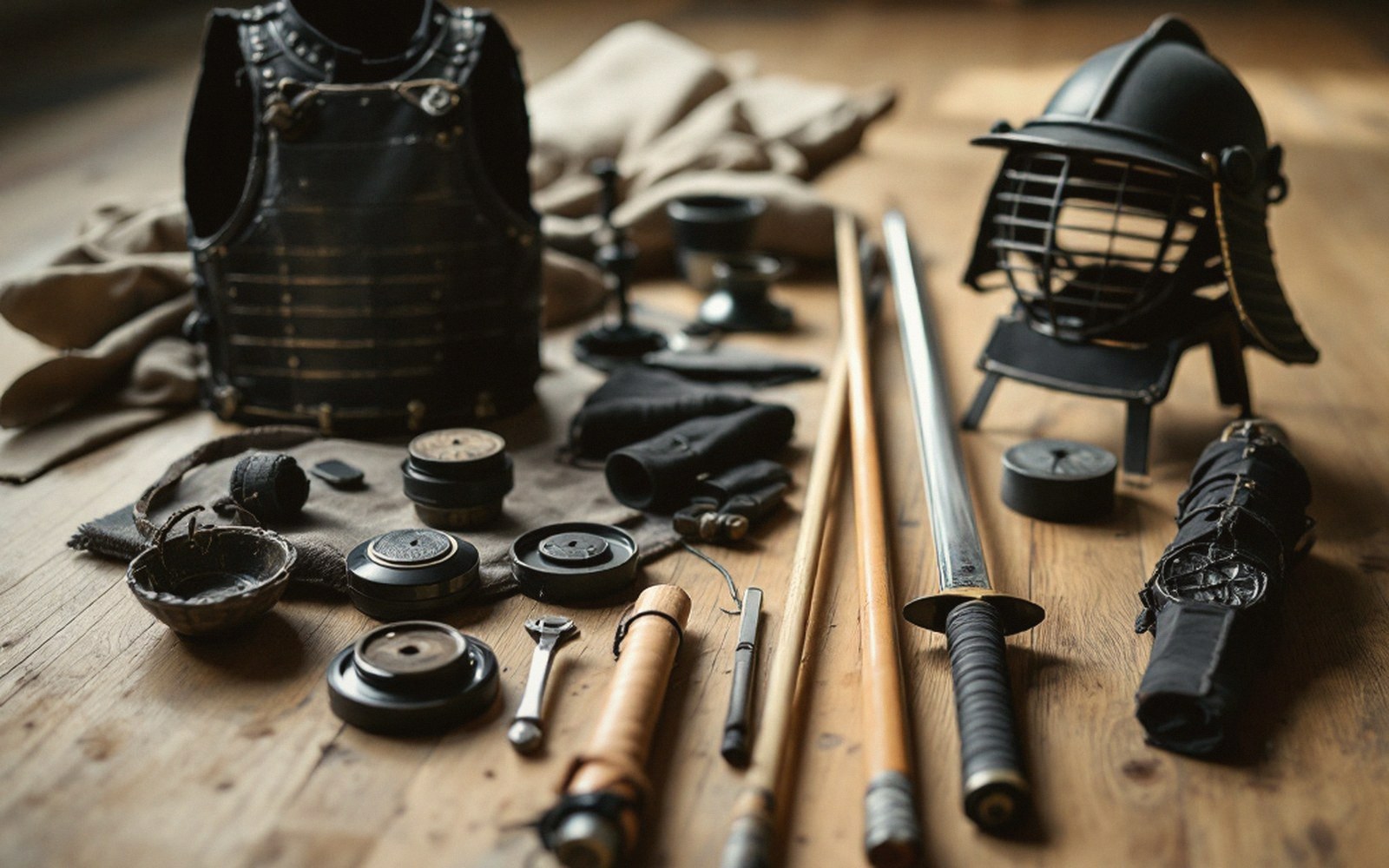
The tsuka-gawa and what it does
The tsuka-gawa — the handle leather — is not glued on or sewn tight from new. It arrives slightly oversized, slid wet over the lower stave assembly and left to dry onto the wood. Shrinkage does the fastening: the hide contracts around the staves and the tsuka (handle) becomes a single unit, taut and stable. A correctly fitted tsuka-gawa sits firm under hard squeezing with no rotation, no creak, and no lifting at the edges near the guard.
The leather is thin by intention. Too much material and the hand loses contact with what is underneath — the four staves, the slight asymmetry of their arrangement, the flex under a strike. The grip is deliberately unpadded. What the hand needs to feel, it feels through the leather directly.
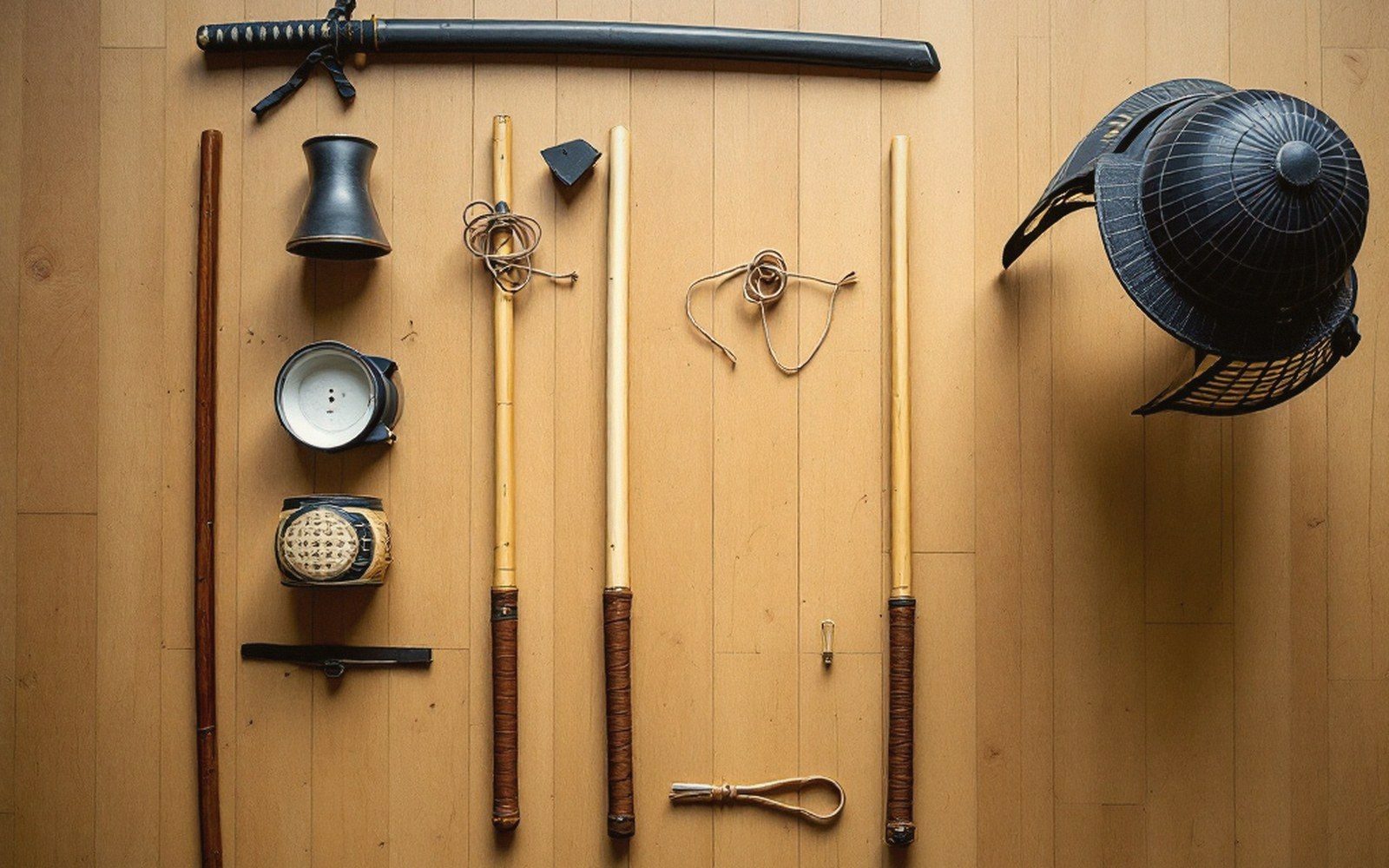
The wear map
Come back to a well-used tsuka-gawa after a year and you are looking at a document. The pattern of darkening, softening and surface loss is specific to the individual who held it. Heavier wear on the lower palm side of the right hand, compression marks where the fingers close for a cut, a bright patch near the guard where the index finger of the left hand sits almost still while the right drives — these are not random.
The leather thins fastest at the point of highest friction, which on a right-handed grip is typically the lower edge of the upper hand. When the surface wears through to pale, fibrous hide the replacement window has arrived, because once the fibre separates the leather can split quickly under a hard grip. Worn leather also loses its tackiness, and a slipping handle is both a performance problem and a safety one.
Replacement is straightforward: the old tsuka-gawa is slit along the seam and peeled back, the stave surfaces cleaned of any residue, and new leather fitted wet. The shrink cycle takes a full day before the shinai should be used again. Fitting dry — a common shortcut — leaves a sleeve that never seats properly and begins to rotate within weeks.