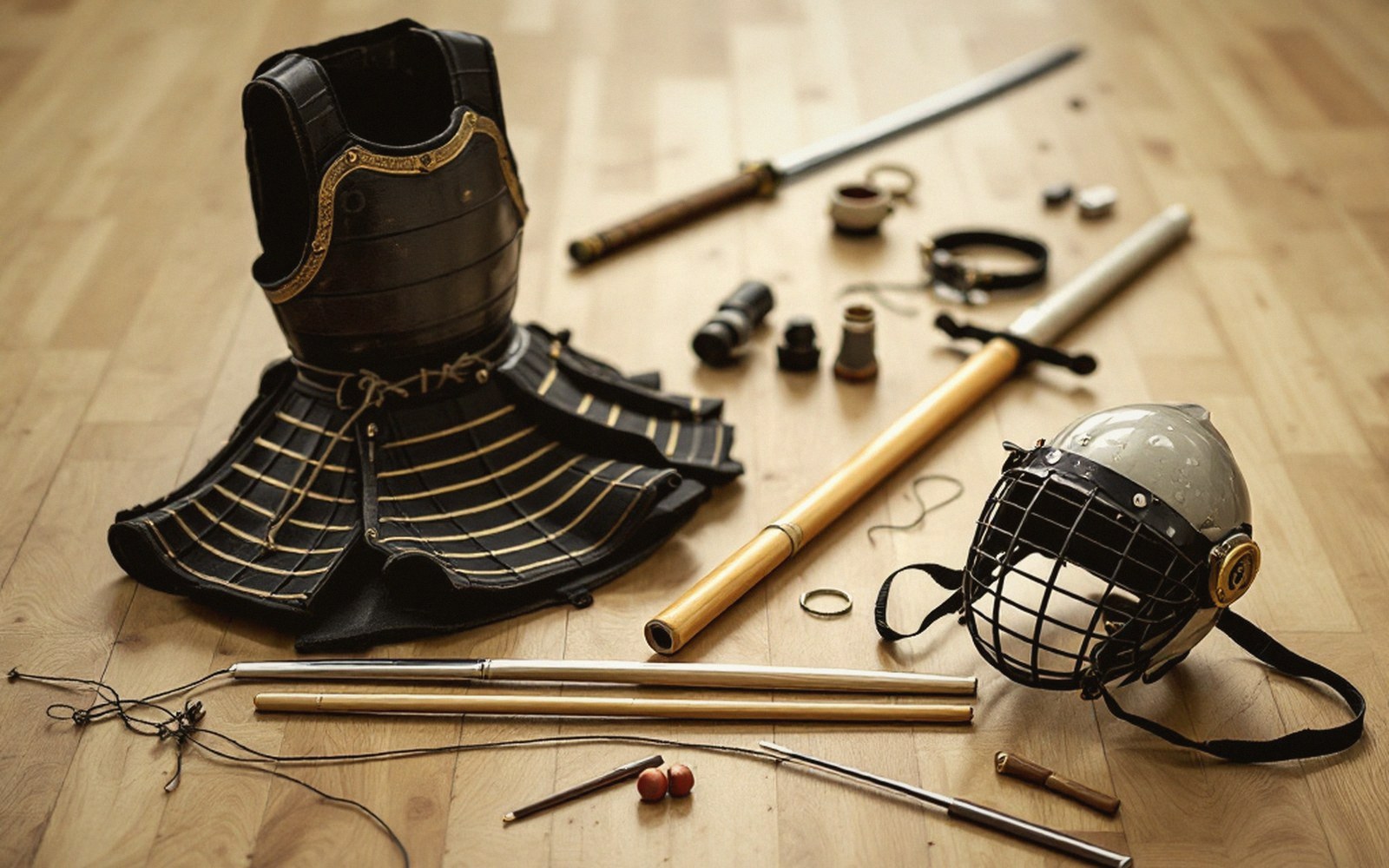
The number and what moves it
A shinai's balance point — the spot along its length where it would rest level on a single finger — sits roughly a third of the way up from the tsuba (the hand guard) toward the tip. Precisely where depends on four things: overall length, the distribution of mass between the four staves, the weight of the leather tip cap and the cord running down the back stave.
Longer shinai carry more material at the tip end and tend to feel heavier in the hand for that reason alone, even when total weight is identical to a shorter one. The balance point shifts fractionally forward as length increases, making the sword feel more front-loaded. Practitioners who work with longer specifications will recognise this as a question of swing feel as much as raw mass.
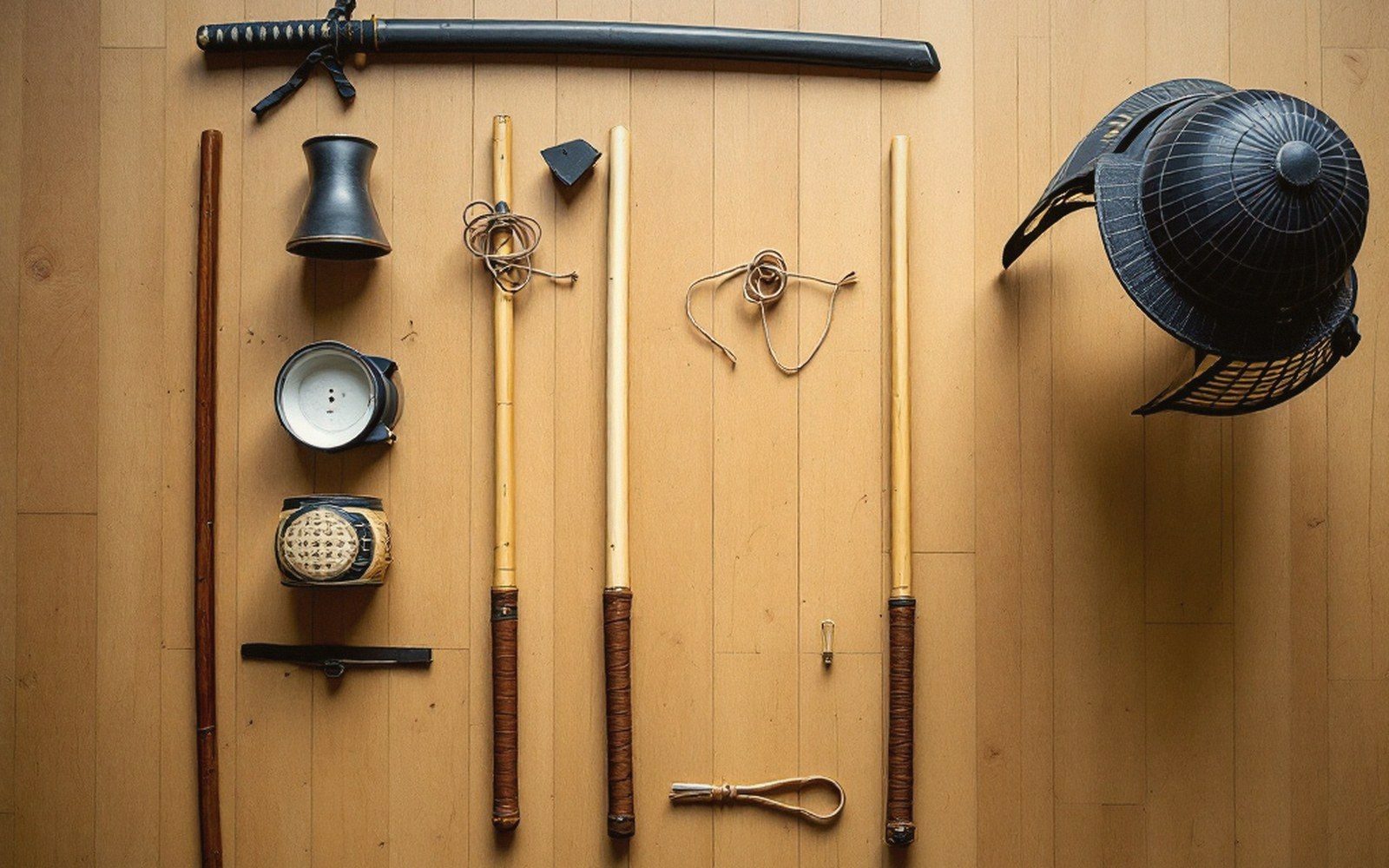
The tip cap is the single component with the most leverage over balance. It sits at maximum distance from the hand, so even a modest difference in its weight — between a thin, worn cap and a new, thicker one — registers clearly when the shinai is swung. A replacement tip cap always alters the feel slightly; this is not a defect but a physical inevitability.
The cord contributes less, but is not negligible. A wet or very heavy cord adds a small distributed mass along the length of the back stave. It matters less than the cap, but enough that repairers who are meticulous about consistent feel will use cords of similar material and diameter across a set.
Stave selection is the quieter variable. Bamboo is not uniform: denser, heavier sections cut from the lower culm shift weight subtly toward the grip if used for the lower staves, and toward the tip if placed higher. A maker choosing staves for a matched set handles each piece, notes where the density lies, and positions them accordingly. It is not a step that can be skipped once the goal is a consistent feel across multiple shinai rather than merely an adequate single one.
Four Staves is an independent publication about kendo equipment and craft. It is not a federation, dojo or retailer.