The joint that does the work
A sprung floor is a simple idea: boards laid over battens that sit above a void, so a strike travels down through the deck and the batten flexes before returning energy upward. What that description skips is the point where one batten ends and the next begins — the sleeper joint. Get it wrong, and the floor does not spring uniformly. Get it badly wrong, and it does not spring at all in places.
The batten — neda in Japanese construction practice, though Western installers usually call it a sleeper — runs perpendicular to the playing surface boards and rests on small rubber or felt pads that isolate it from the concrete sub-floor. It is not fixed to the sub-floor; it is held down only by the weight of the deck above it. That freedom to deflect is the whole mechanism.
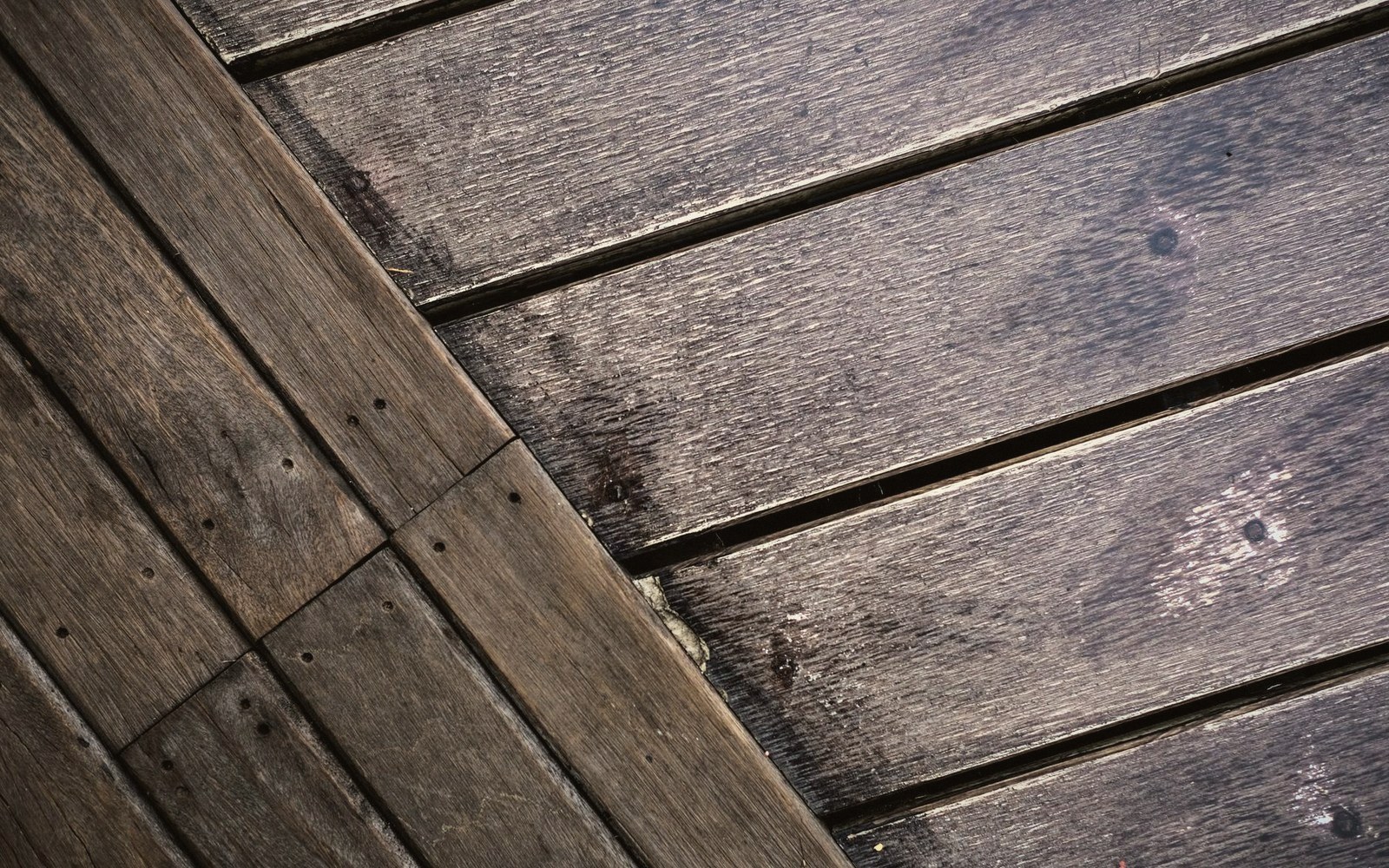
The joint between two batten lengths is almost never a butt end sitting directly above a pad. A butt joint over a rigid support kills deflection at exactly that point, because the load travels straight down into the sub-floor rather than bending the timber. The standard approach is to offset the joint: the two ends overlap a short distance, or a short splice plate ties them together mid-span, so the joint itself can still travel downward when loaded. Some systems stagger the joints across adjacent batten rows so no line of stiffness runs across the full width of the floor.
Timber choice matters here more than elsewhere. A batten that is too stiff — dense hardwood, heavily dried, large cross-section — barely flexes regardless of how well the joint is managed. One that is too soft takes a permanent set within a season. The joint fails slowly in that case: not with a crack, but with a gradual flattening of the spring as the fibres at the overlap compress and stop returning. This is what produces a dead spot: not a broken board, but a batten that has given up at its weakest point.
Inspection means pressing the deck with full body weight over each batten row and feeling for the areas that resist rather than give. A good floor feels consistent under foot. Where it does not, tracing the problem almost always leads back to a sleeper joint — either over-rigid by design, or simply tired.