The void that matters
A kendo floor is not nailed flat to a concrete slab. It is built away from it — boards sitting on a grid of timber battens, the battens themselves raised on small rubber or timber pads, the whole assembly floating above a continuous air gap. Step on it and the surface moves, just perceptibly, perhaps two or three millimetres under a full strike or a hard landing. That travel is the point. It returns energy to the foot and leg rather than stopping it dead, and over a two-hour practice the difference in cumulative joint load is substantial.
The construction follows a straightforward hierarchy. Concrete base, then a damp-proof membrane. On top of that, a grid of sleepers — battens running one direction at regular intervals, often a second layer crossing at ninety degrees — each batten shimmed or padded to bring the surface to level. The finished boards, typically hardwood tongue-and-groove, are secret-nailed or stapled down through the tongue so the face stays clean. Beneath the boards, the void: sealed, ventilated if the design is careful, and consistent in depth across the whole floor. Consistency matters because dead spots — places where the spring collapses because a batten has shifted or swollen — register immediately underfoot and can change footwork in ways the practitioner may not consciously notice.
What the spring actually does
The deflection is elastic, not soft. A well-built floor does not feel spongy; it feels firm and then firm again on the return. What it is preventing is the transmission of peak impact force straight into the ankle, knee and hip. In bare feet, that distinction is legible: a floor built directly on concrete feels different within minutes, harder in a way that accumulates. The sprung version spreads and delays that peak, and the leg muscles have just enough time to absorb and contribute.
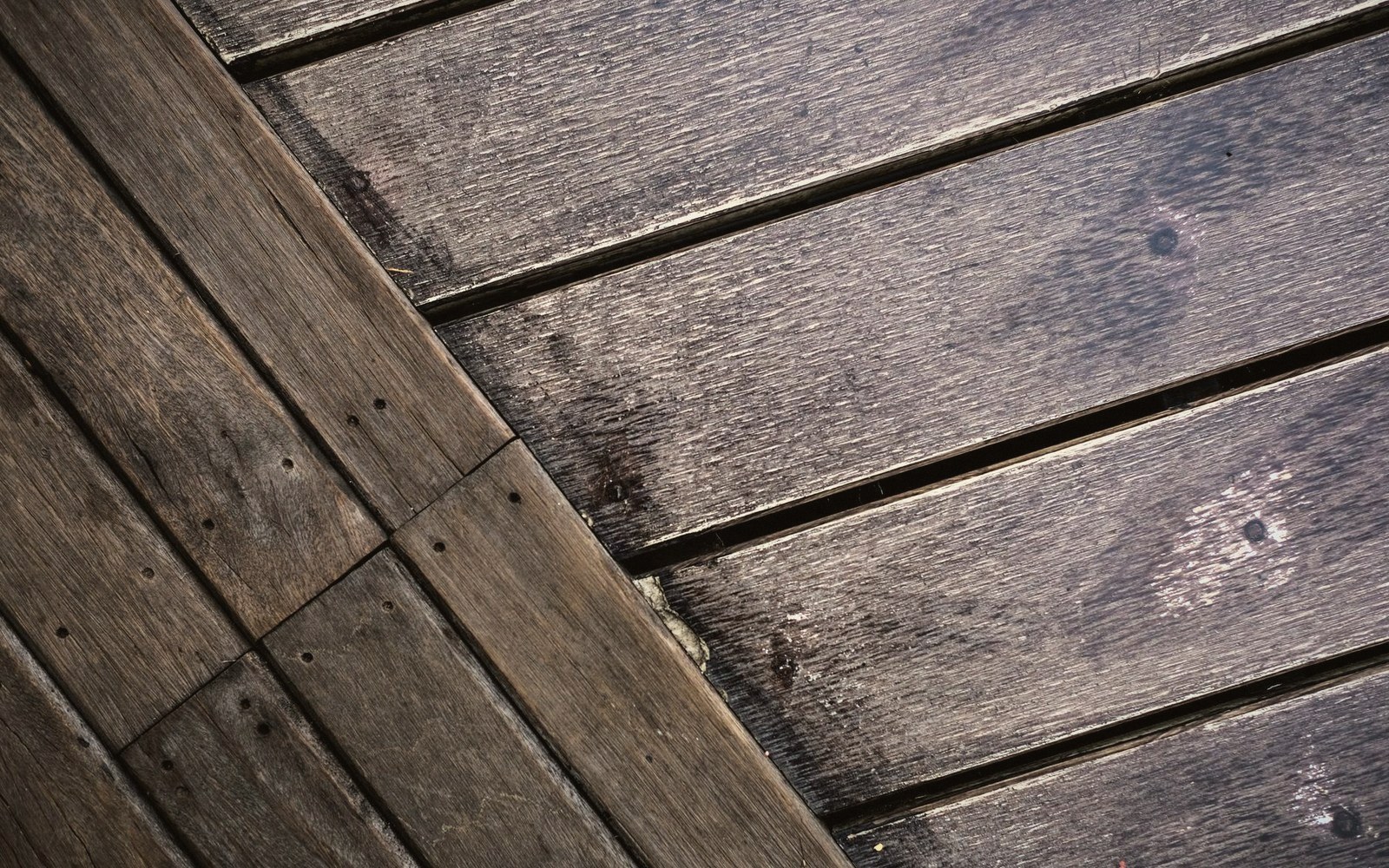
The choice of surface board species and thickness shapes this. A thinner board on a wider batten spacing will deflect more; a thick board on close centres will feel stiffer. Japanese sports floor practice has long favoured hardwoods — Japanese oak (Quercus mongolica subspecies, known commercially as mizunara, and relatives) and various domestic species — chosen for surface hardness, stability under humidity change, and the way the grain takes a finish. The finish itself is a separate consideration: the surface must not be slippery under a sliding foot but must not grip so hard that a pivot becomes a wrench. What the finish does mechanically — not just to appearance — is covered in the guide to finish and grip.
Batten spacing in a serious installation is typically in the range of three hundred to four hundred millimetres on centre for the primary layer, though the exact figure is calibrated against board thickness and the anticipated load distribution. The sub-pads beneath the battens — neoprene or dense rubber is now more common than the traditional timber wedge shim — do two jobs: they level the assembly and they add a small amount of acoustic and vibration damping, which matters in a building where the percussion of a valid strike is already a signal and the floor should not blur it into general noise.
A floor built this way is also maintainable in a way a glued-down surface is not. Individual boards can be lifted and replaced; batten sections can be shimmed back to level; the void can be inspected for moisture accumulation or pest damage. Longevity depends on both the quality of the original construction and the willingness to open it periodically and look. The floor that gives is, in that sense, the floor that can also be kept — which is a different kind of value from the one you feel underfoot, but not a lesser one.